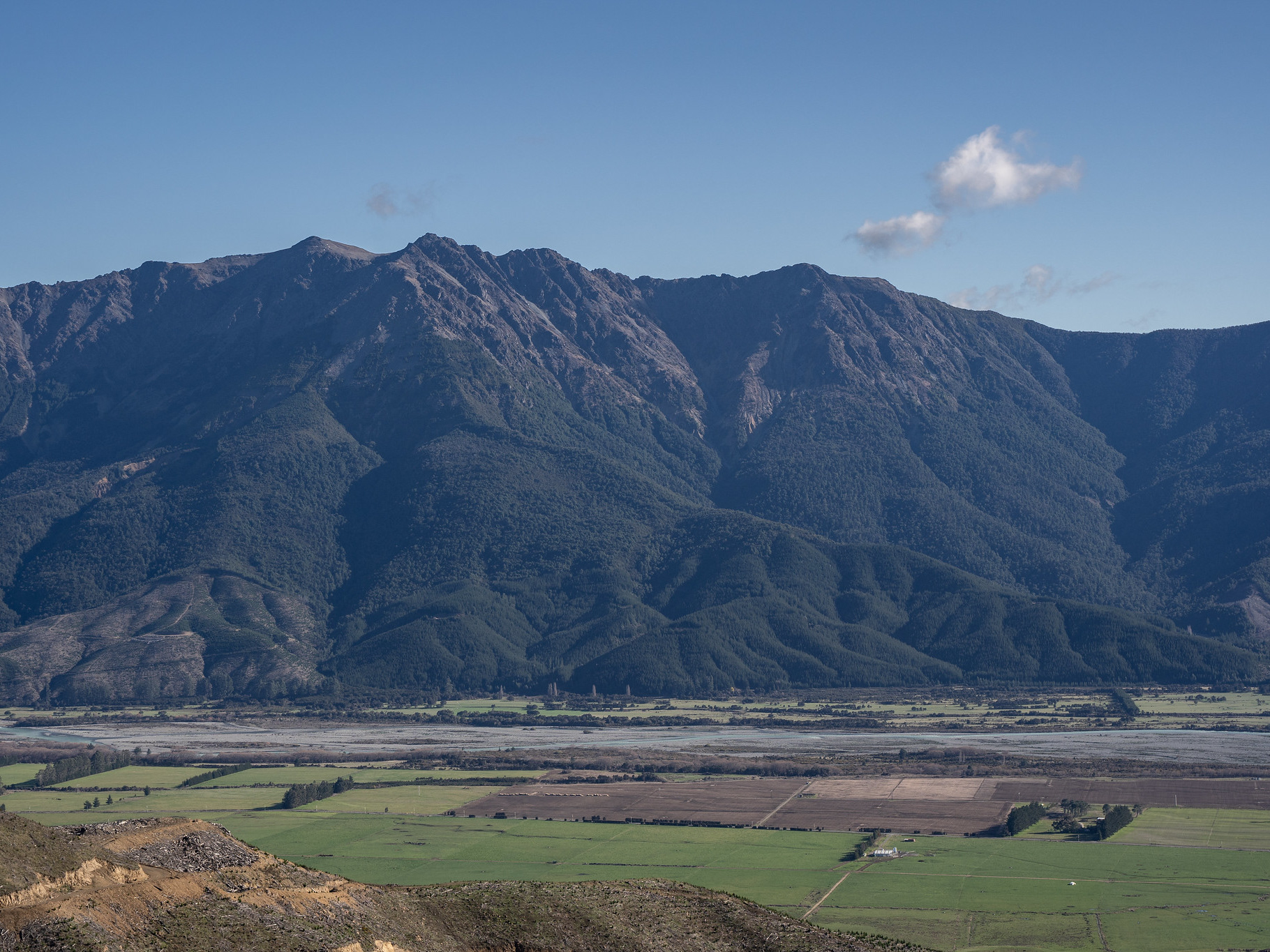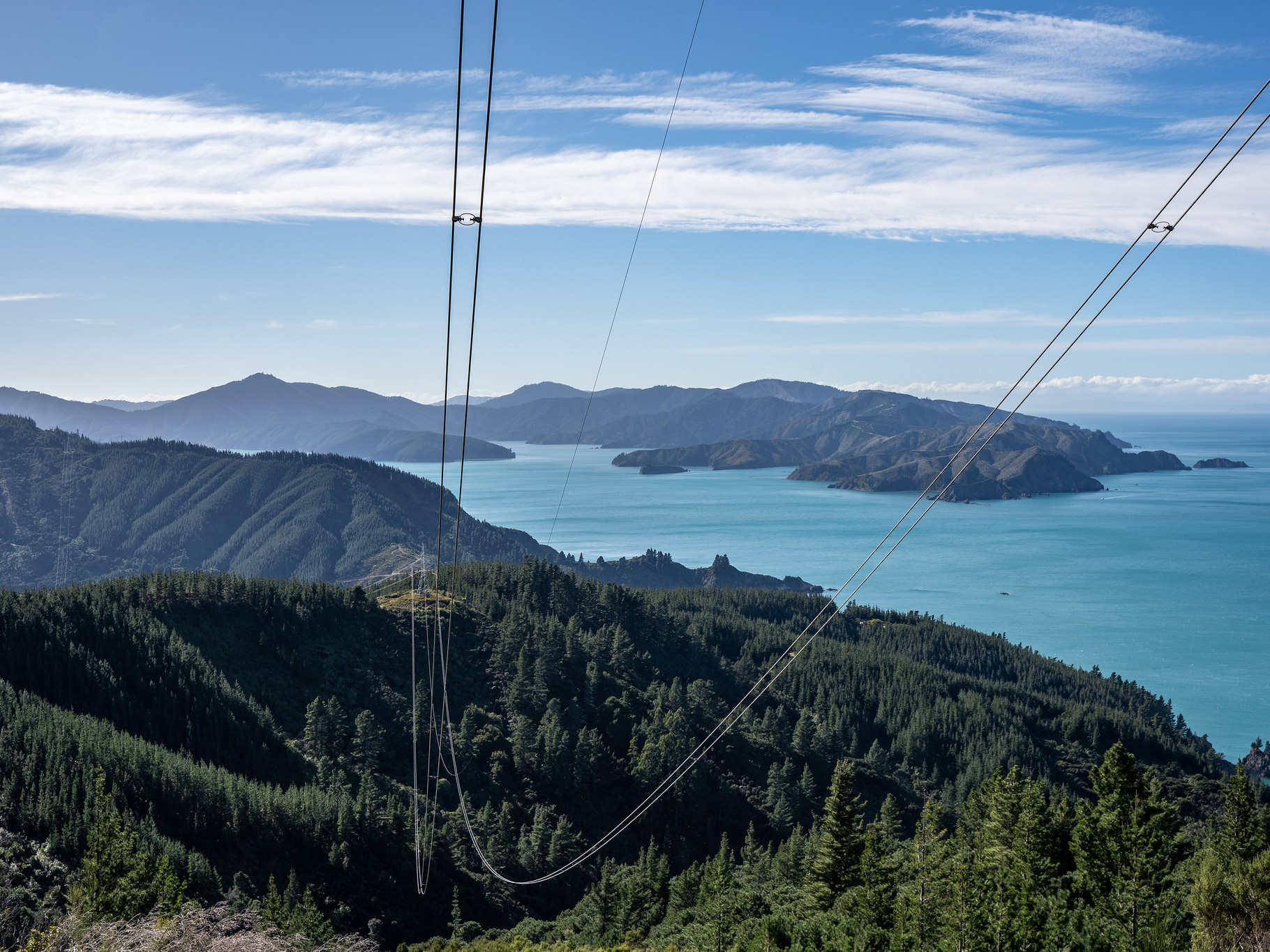
Standing amongst the barren ranges east of Nelson Lakes National Park, Pinnacle is a climb that had long been on my bucket list but I'd never made any serious attempts to climb. It's reasonably close to Blenheim, generally has better weather than Nelson Lakes and is also reasonably quiet with more climbing attention focused on the adjacent Scotts Knob. My interest was further heightened by its inclusion in the new NZAC bookThe High Pathways, so one day I decided to just bite the bullet and have a crack.
The forecast for Monday was reasonably good, so I packed the night before for the expected day trip. There's not a massive amount online relating to the peak, though the local NZAC guidebook rates it as "the best climb in this guide". All of the successful attempts that I could find online did it over 3 days, which seemed like a relaxed timeline with the known climb metrics. It's not a super committing approach, so I figured that if worst came to worst, I could just bail back down from a known turnaround time.
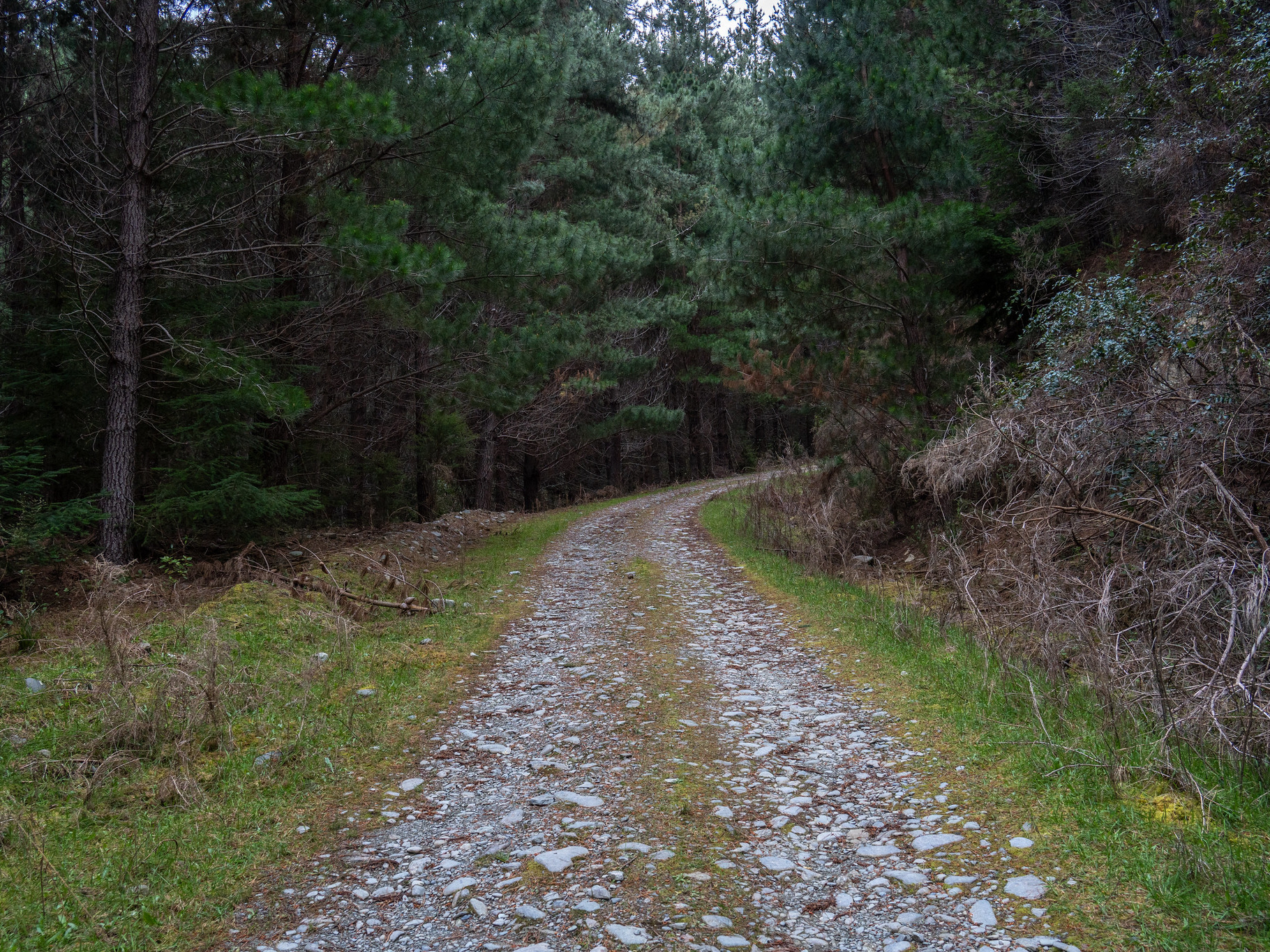
I made it out to Leatham Road ok in the early morning, even covering the first 3km of the '4WD only' track to the confluence of Boulder Stream and the Leatham River. There is parking available here, which I gratefully took and set off on my mountainbike along the 4WD track to Boulder Forks Hut. It was a pretty unpleasant ride in, which was largely my fault - I'd tried to get my poor neglected bike serviced immediately before Christmas, which wasn't completely finished. A seized front derailleur meant that only one chainring was available, and the blown fork seals quickly meant any suspension was soon gone and the rockier bits would constantly bottom out the shocks. The 4WD track is not bad, but it's over 200m of climbing across the 5km in and a lot of it just basically protracted rockgardens. I walked my bike on the uphills, and it took 35 minutes to cover the distance - it wouldn't have been much slower to walk!

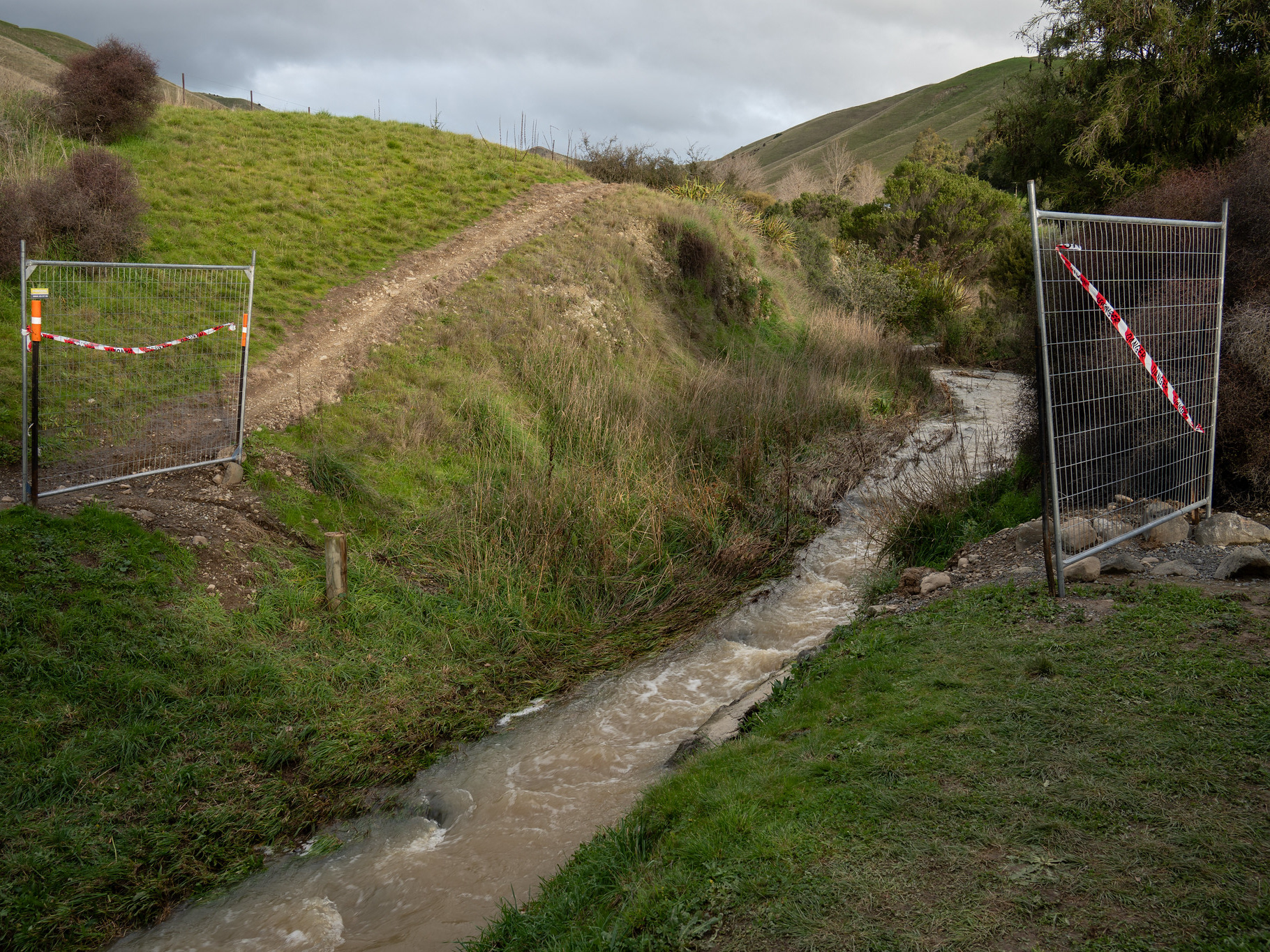
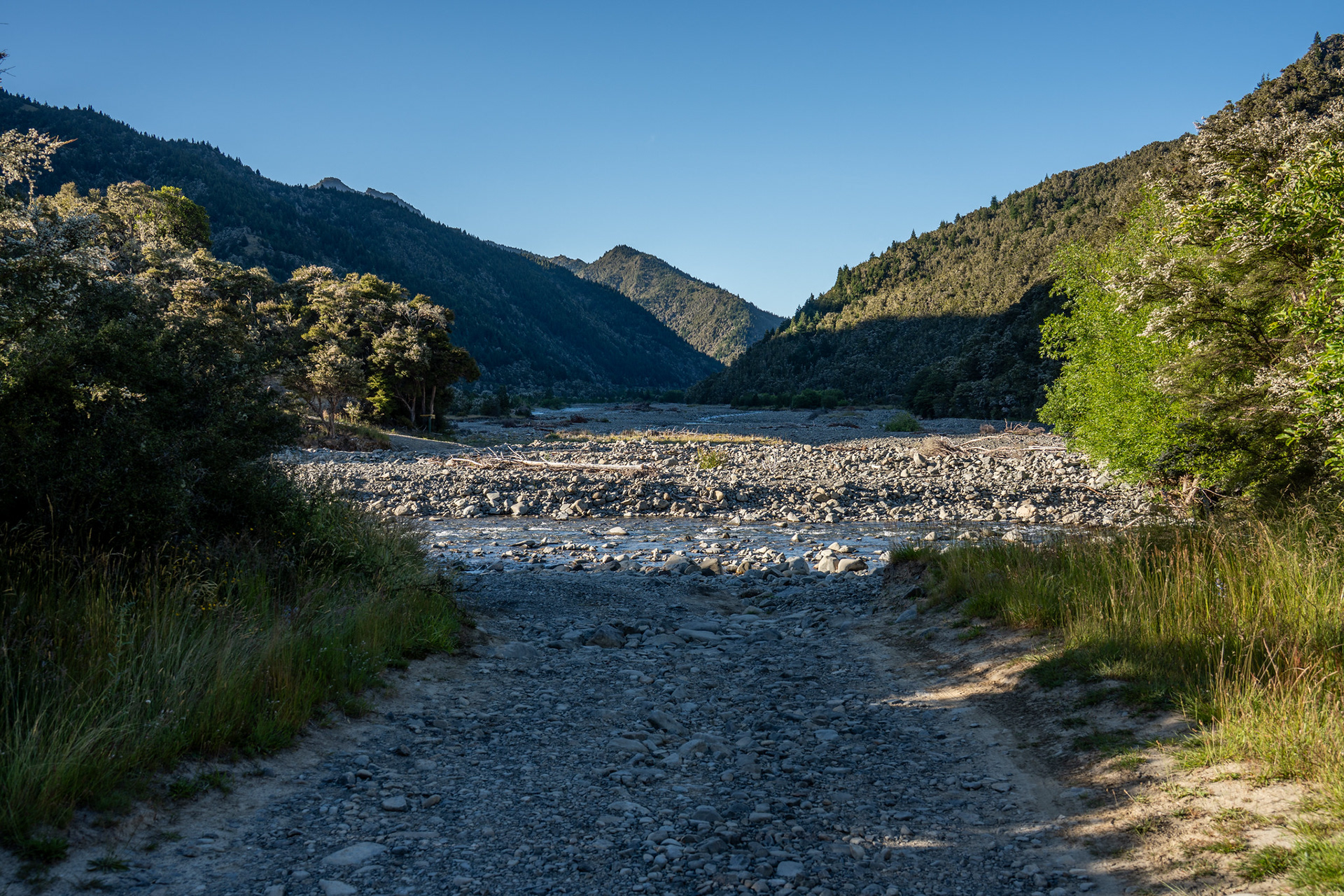
The opening ford of Boulder Stream, the 4WD track of interest heading left.
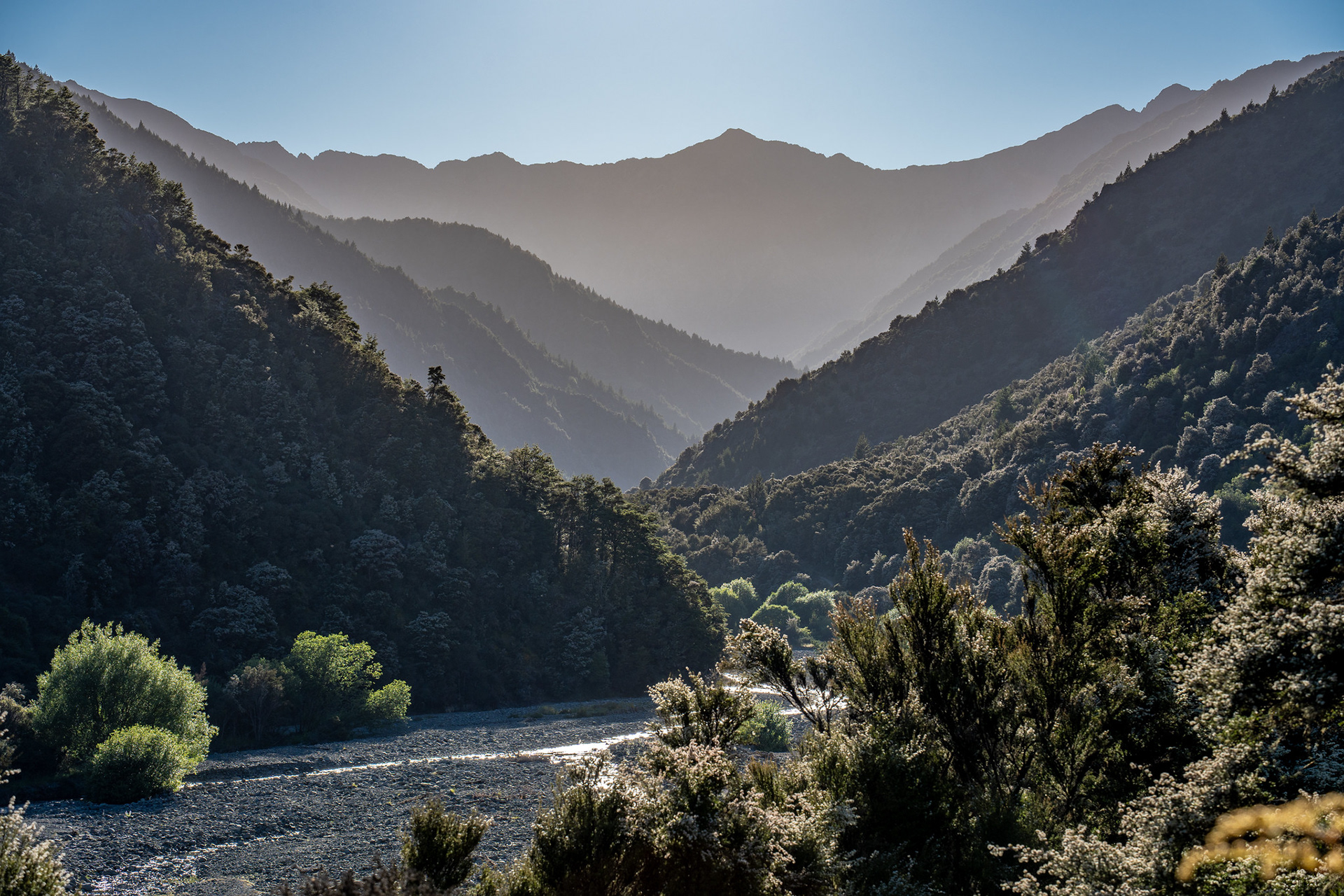
Looking up Boulder Stream in the morning glare.
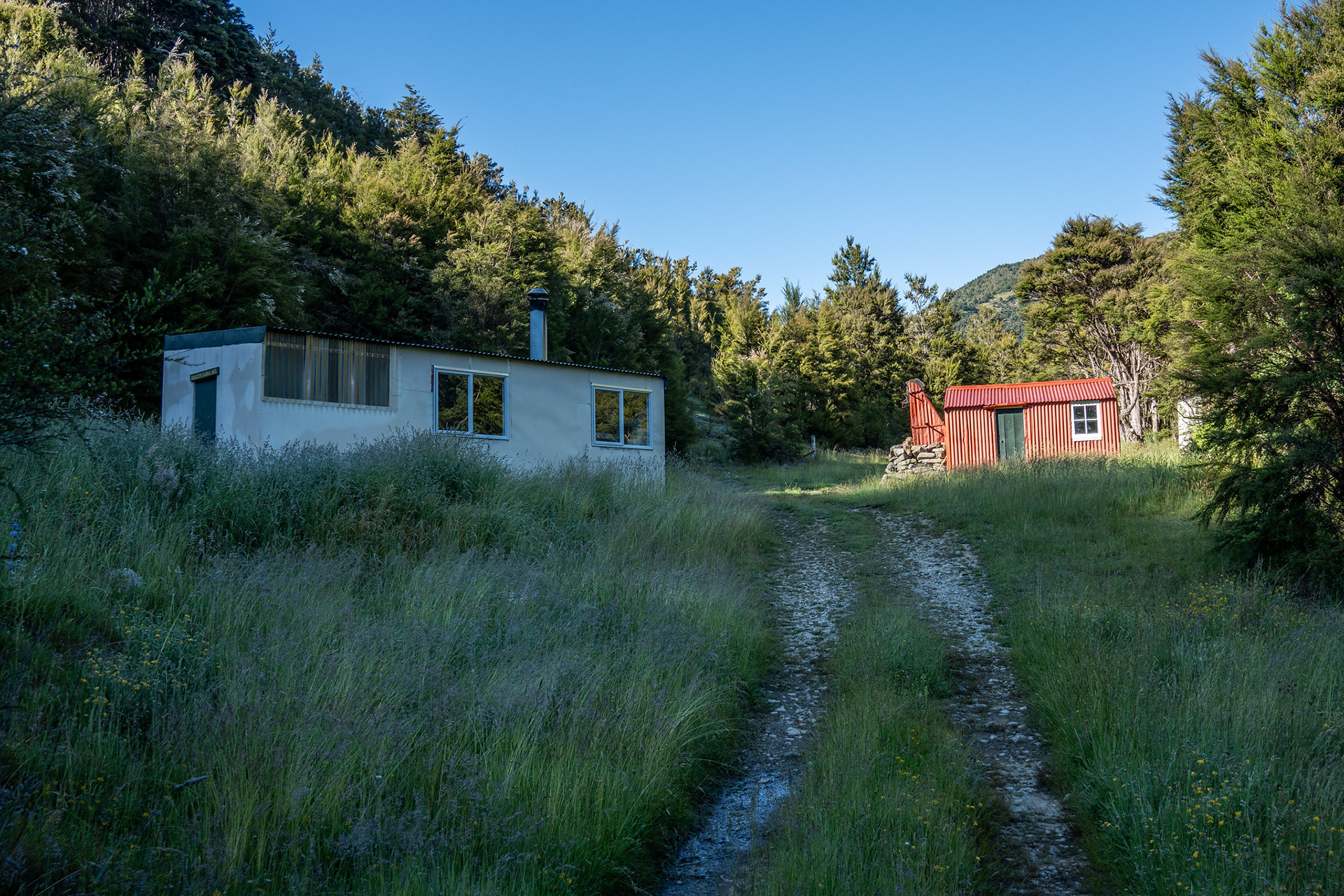
Boulder Forks Hut is a cool spot. There are actually two huts, the historic one which Sir Edmund Hillary stayed in when he climbed Pinnacle and the newer one which now has the DOC bunks. I had a quick perusal of the hut book which implied it sees reasonably little usage, swapped out my bike shoes for tramping boots and headed out for the climb.

The new (left) and historic (right) Boulder Forks Huts. 
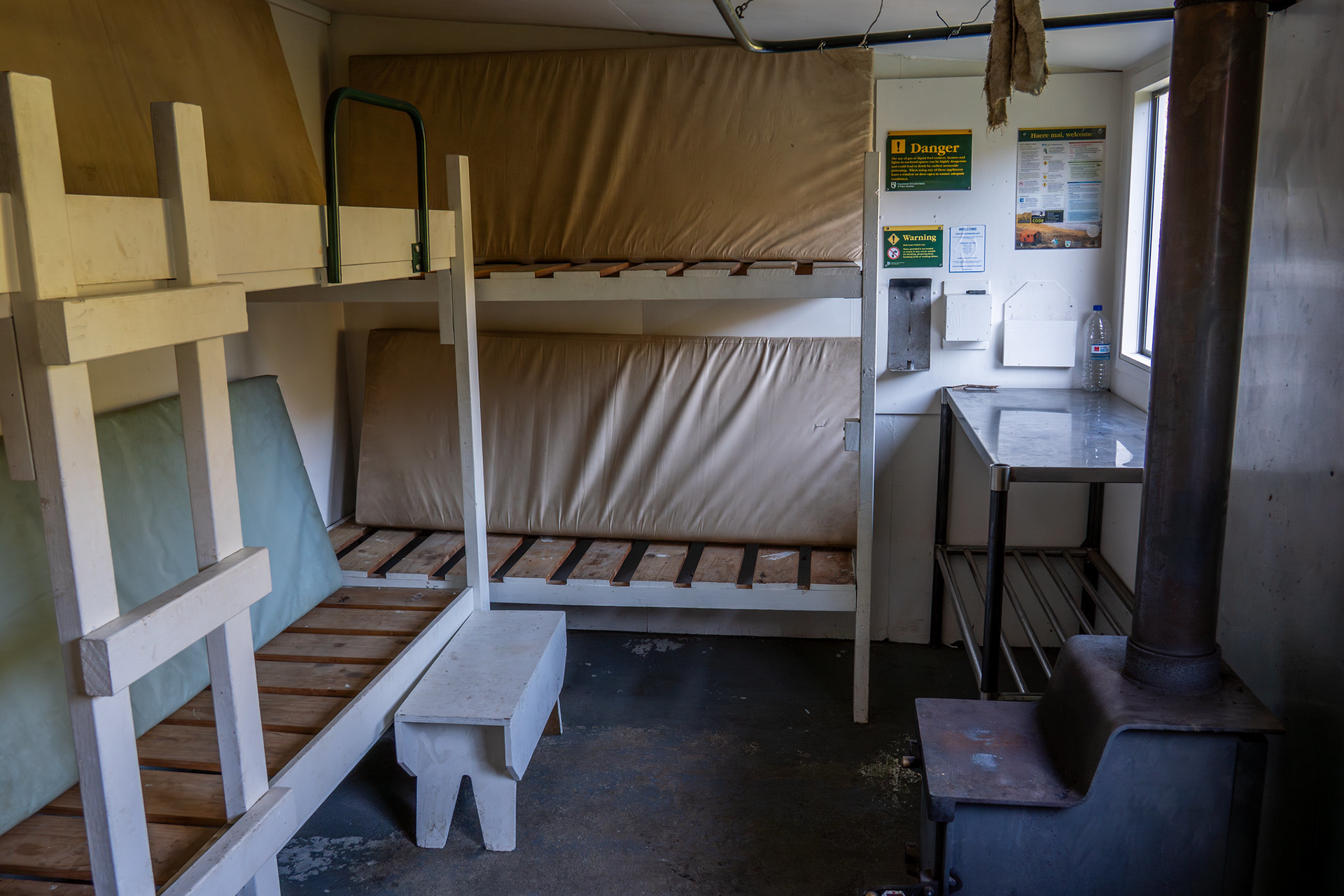
The interior of the new Boulder Forks Hut, if you're planning to stay.

There are various routes up Pinnacle, with the guidebooks now recommending picking up a hunters' track on the northern ridge of pt. 807 (to the grass clearing) and then bashing through open beech forest above. I decided to take the older route up McCallum Stream, which is more direct (and technically harder) but also has significant rockfall risk. The main motivation for this was more the fear of the 'tracked' section being hard to find (the guidebook says it's only visible when you're 100m above the river), along with the comparative uncertainty of what the forest travel would look like.

McCallum Stream is very open, and it's only around half an hour before you hit the obvious location where it gorges up and becomes impassable. There's a waterfall in the river, and a steep incised gut to the right which needs to be initially climbed. While its steepness is notable, the real issue is how loose it is and how confined the gut is. If anything big came down it (and it's about 700m long!), you might be in for a world of hurt.
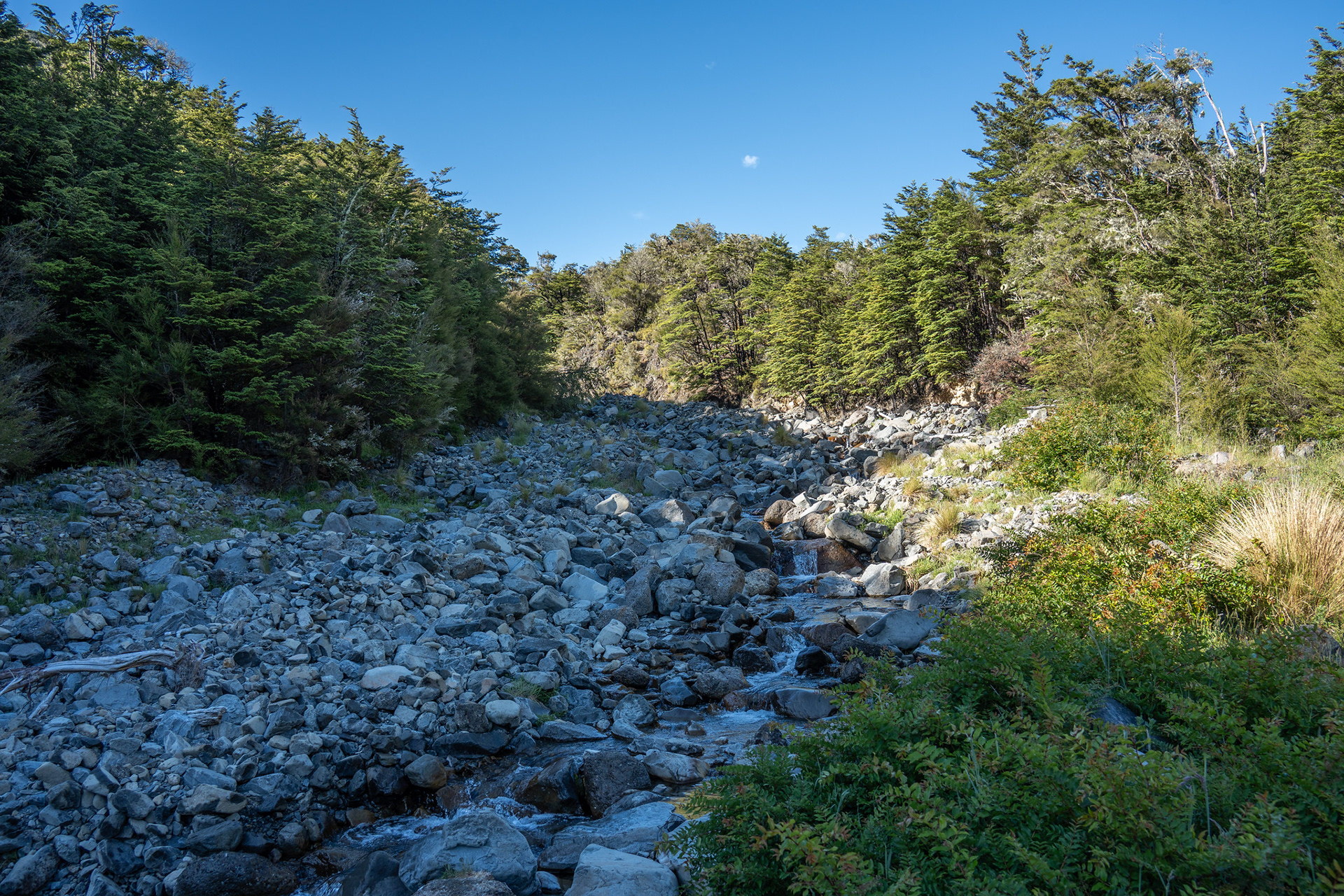
The lower reaches of McCallum Stream, a lovely setting.
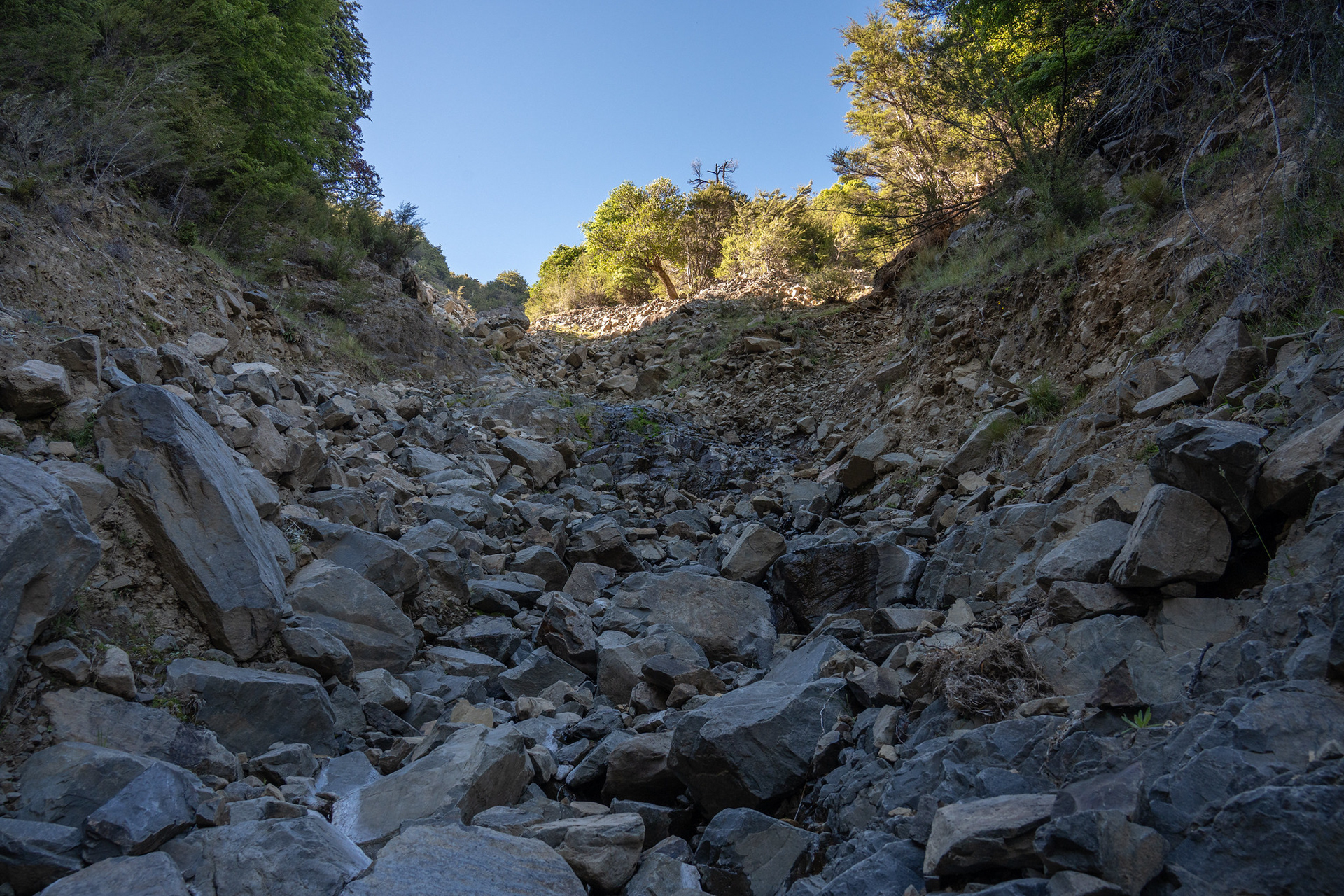
Heading up the slip on the true left of McCallum Stream.
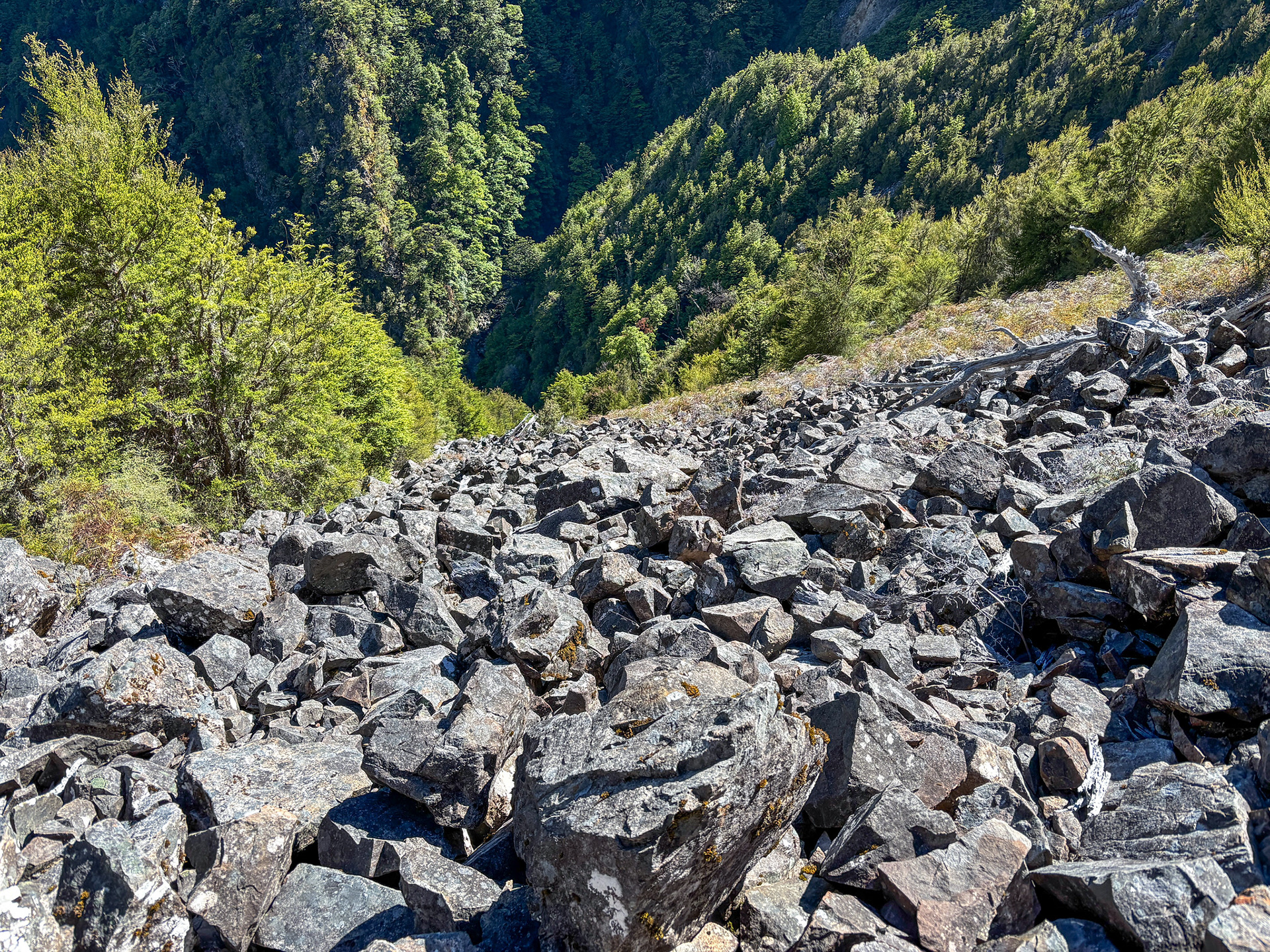
Fortunately after heading up the gut for maybe 100m, it's easy enough to climb out to the right and bash through a short tongue of regenerating beech forest to access a boulder field adjacent. This field is delightful travel, and allows quick access up towards the NW ridge of Pinnacle. At the very top, it's best to hug the right hand margins where an animal trail will lead you through the small amount of remnant vegetation. There is a patch of beech forest here to the immediate left, which can either be sidled on the right or travelled directly through.

Back down the boulder field.

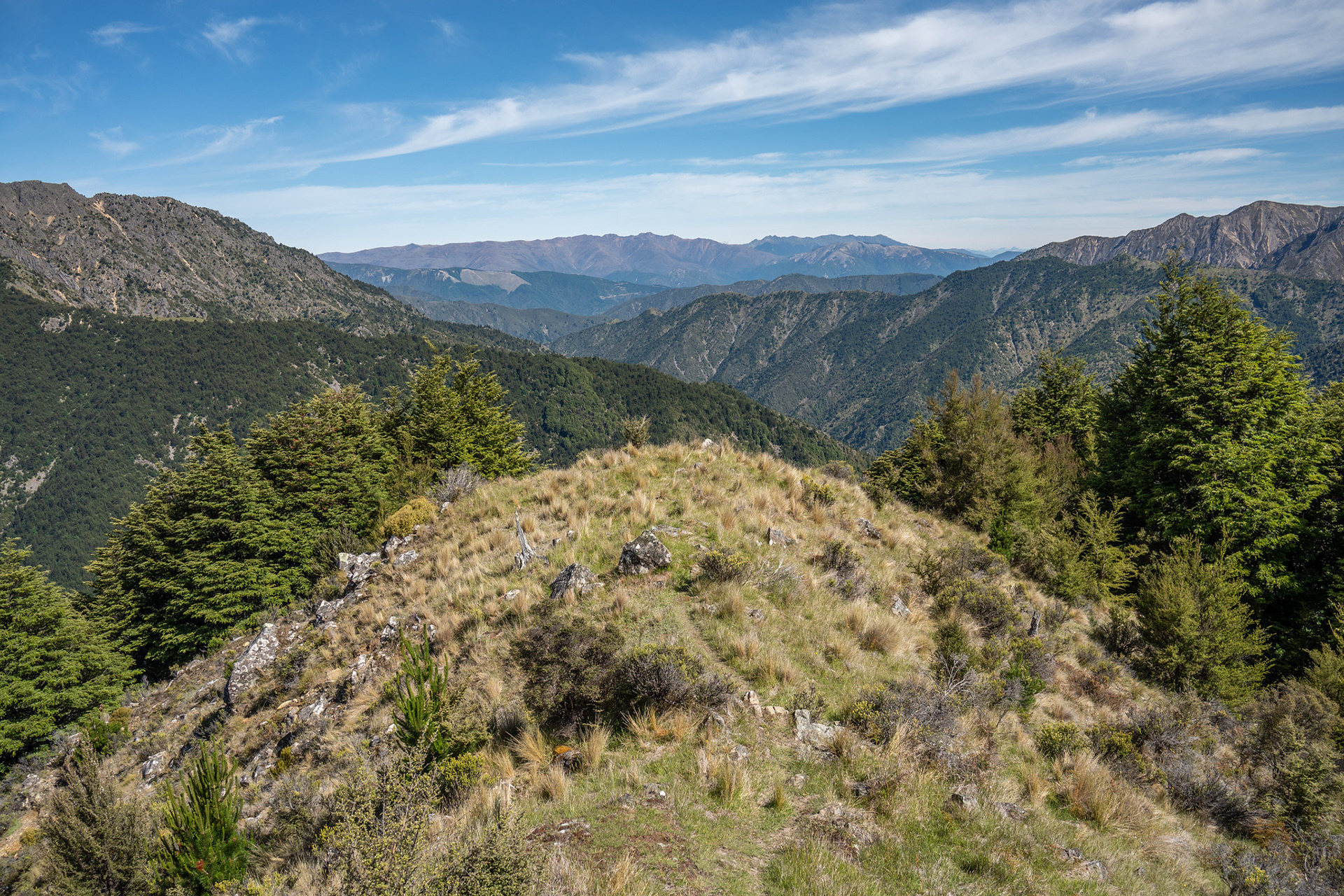
The view from the NW ridge of Pinnacle at about 1200m, immediately after clearing the boulders. 
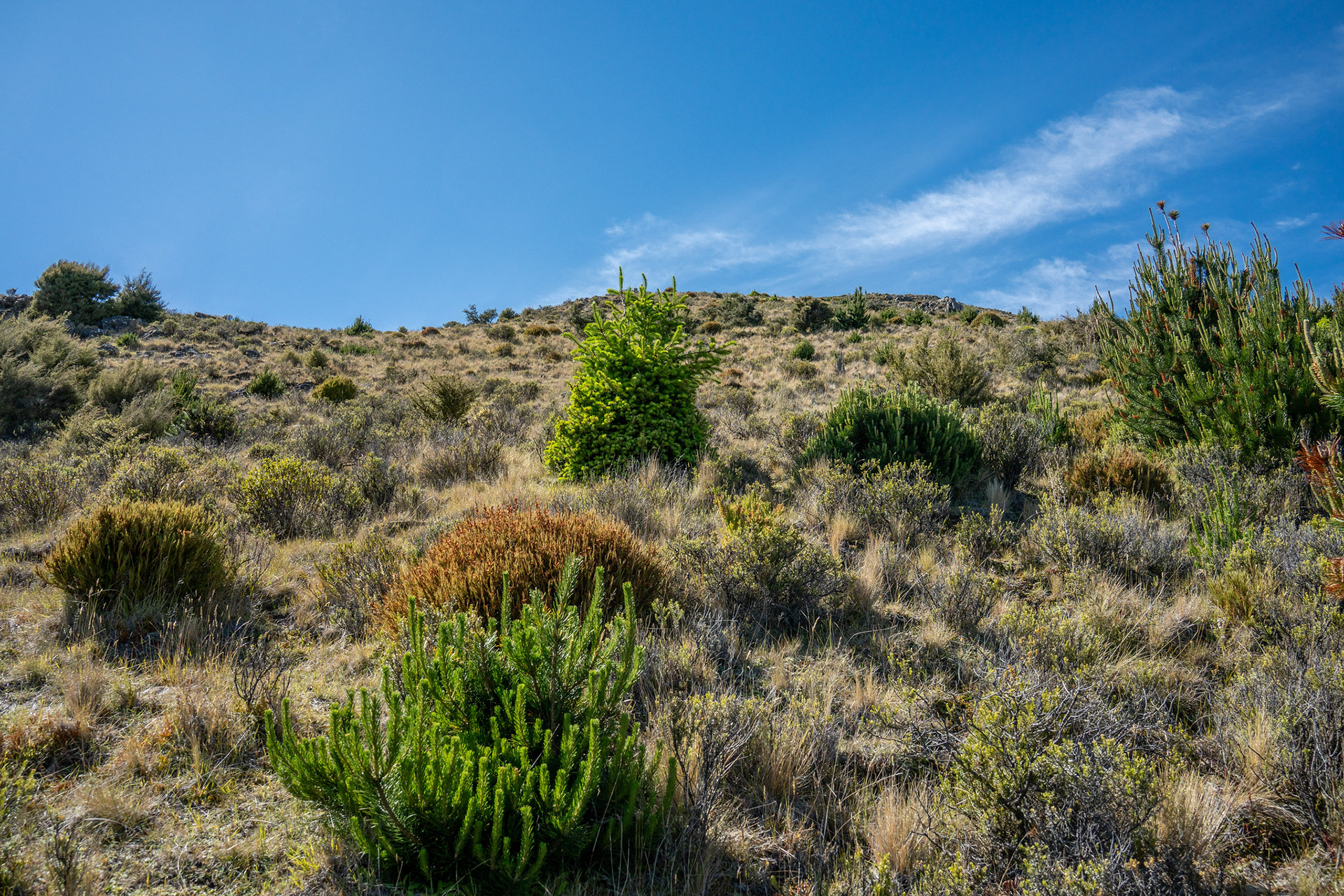
Once back out in the open again, it's just a long climb up the spur. There are a few rock bands to negotiate, the main one at around 1550m could probably be avoided on either side but it's also easy enough to just climb straight through it. The upper ridge narrows but is never difficult, then at 1800m you step off the solid rock and onto a long debris field. I had a couple of goats for company as I looked up to the summit block, which seemed a daunting prospect.

Delightful travel on the lower spur, despite the pines.
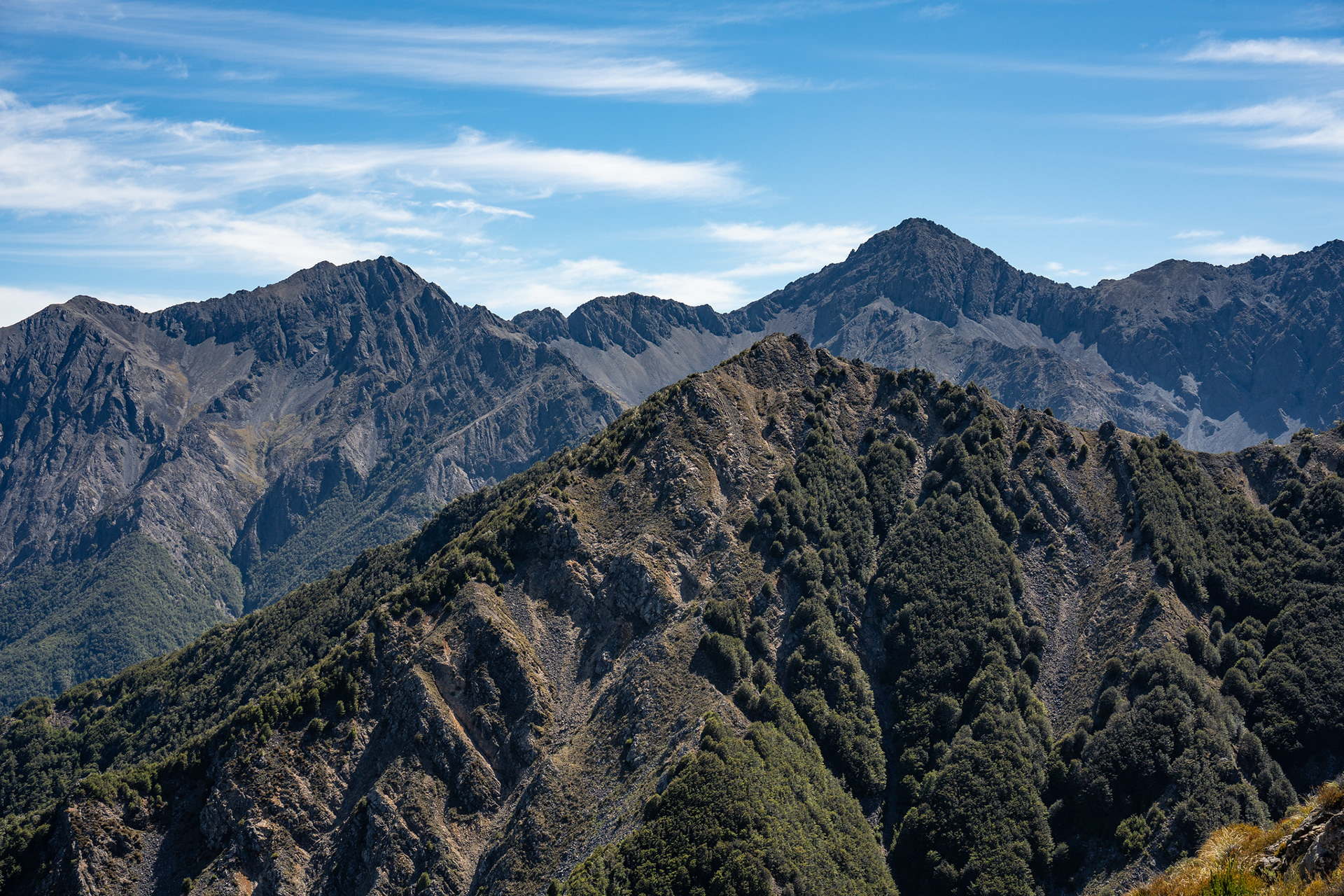
A glimpse left towards Bounds, I'd love to get up there one day.
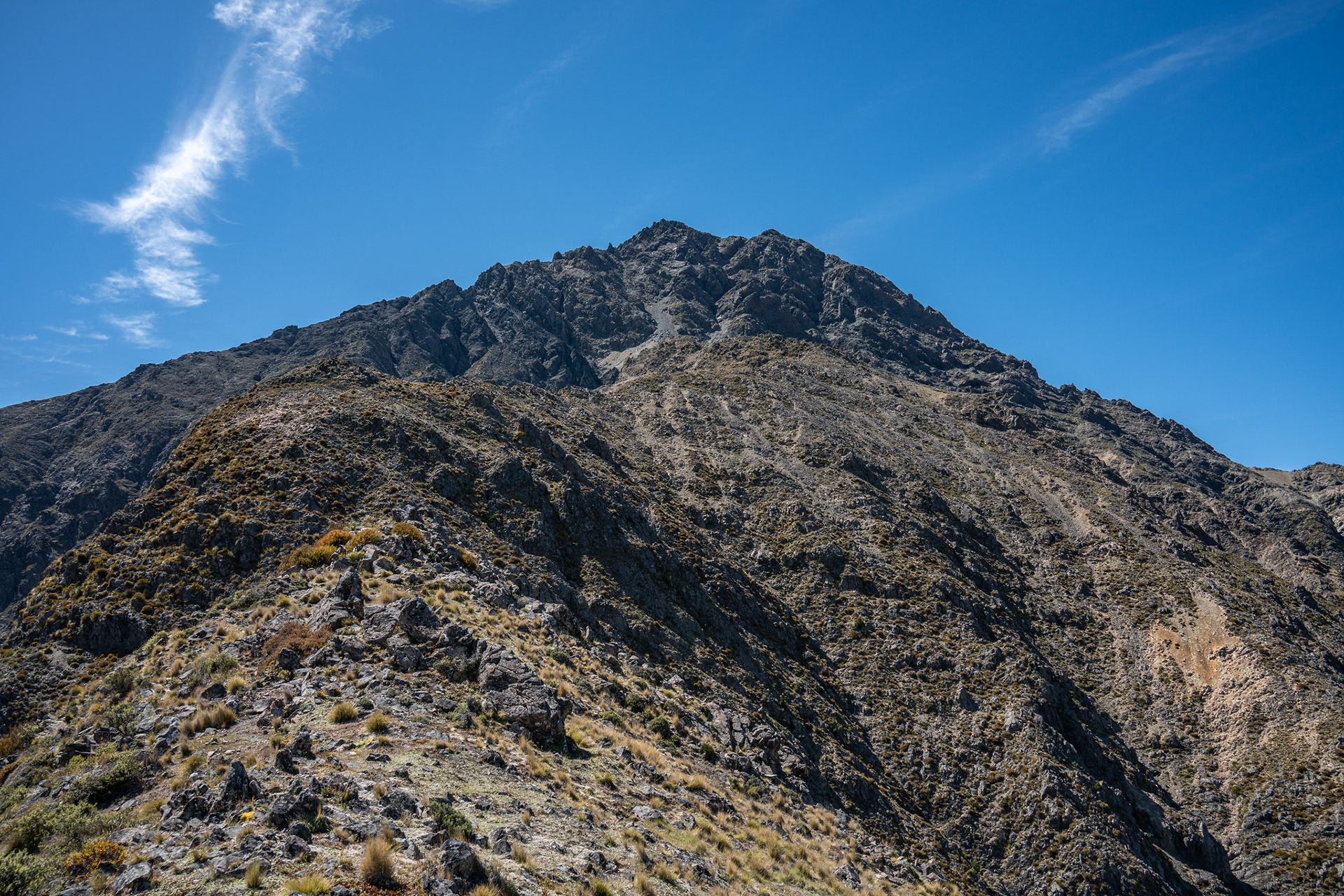
The view up to the summit pyramid of Pinnacle.
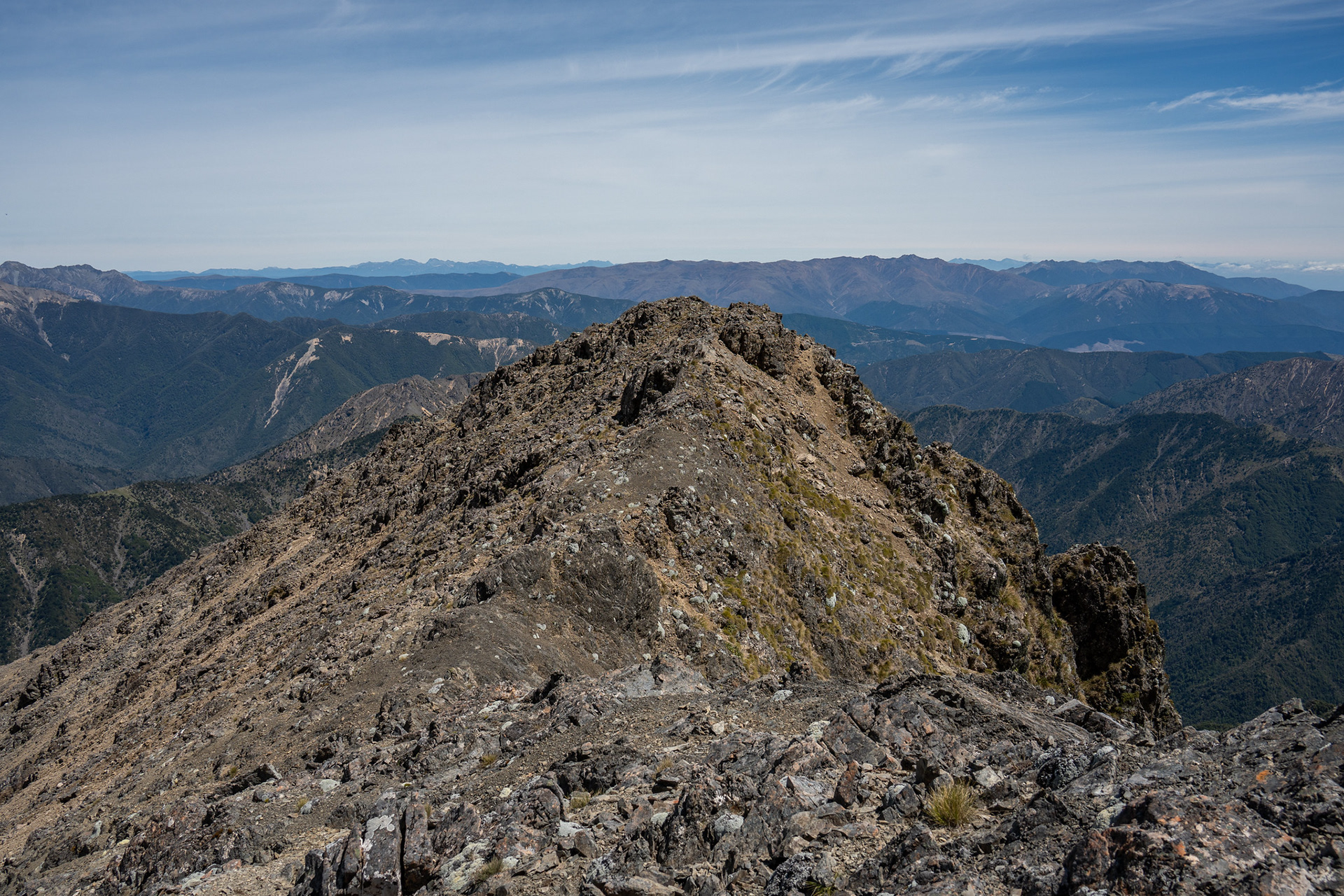
Looking back down the NW ridge of Pinnacle from about 1800m.
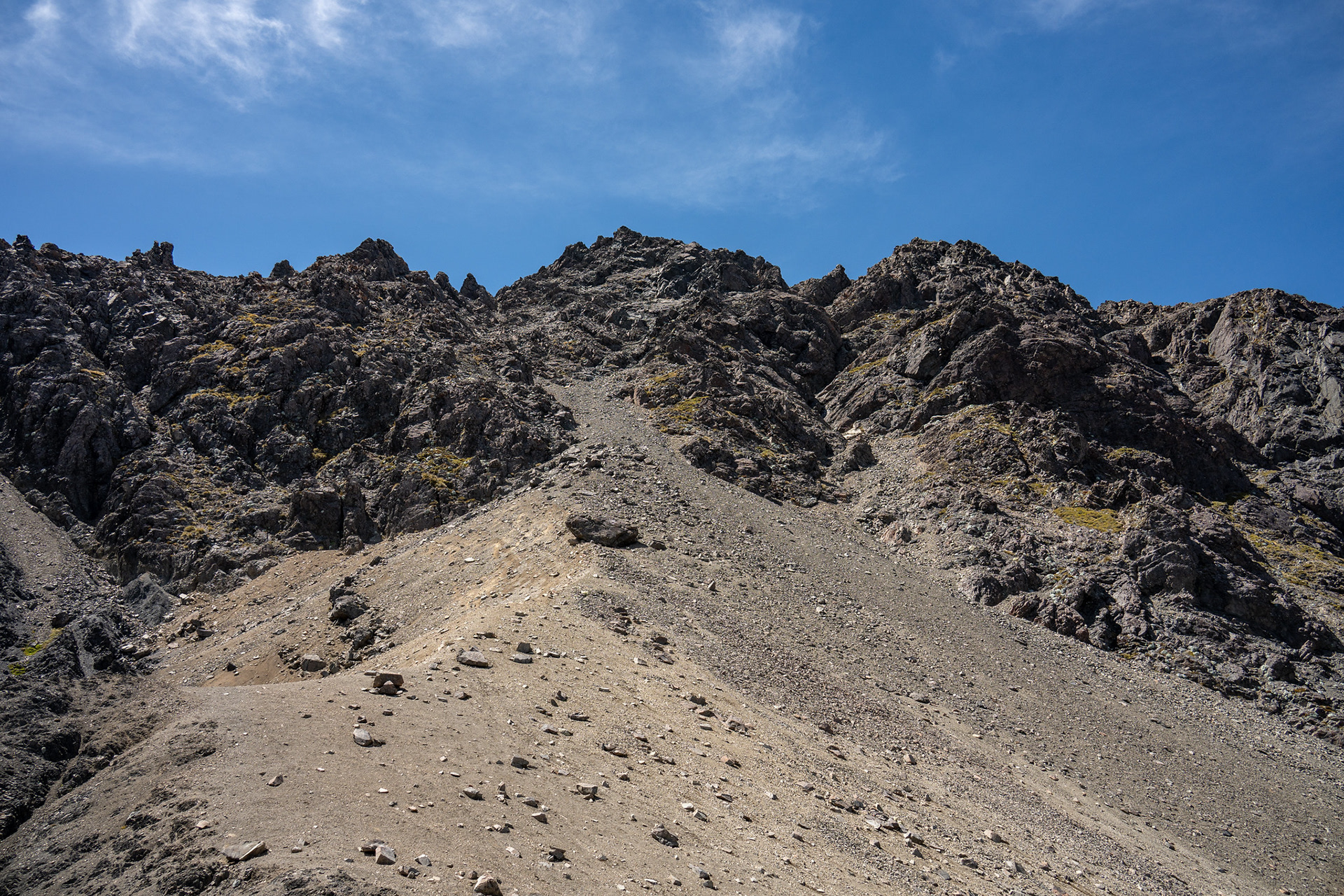
There are three main gully systems evident on the NW face. Most parties seem to take the dominant left hand one, though another trip report online references the middle gully (taking the right hand branch) as being a bit less technical. I had planned to go left as per the guidebook, so I headed off up the debris field for the first few hundred metres before entering the intimidating gully.

The NW face of Pinnacle, I took the obvious gully behind the large boulder but going right is apparently easier.

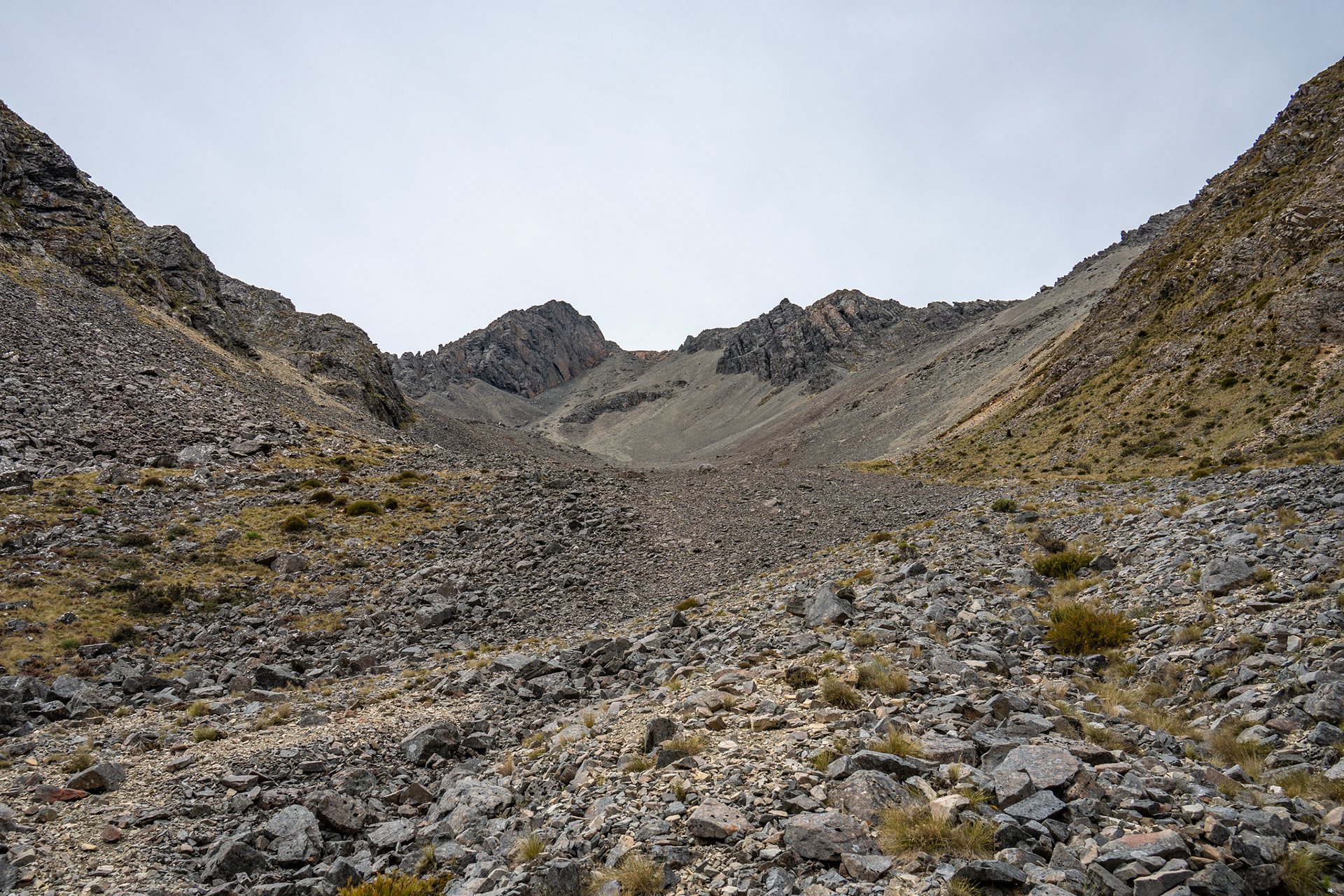
The gully itself is an interesting feature. It varies in width, 5 - 10m wide in the lower sections crimping up to a squeeze near the summit ridge. It's a very obvious rockfall funnel if anything does get shed, so wearing a helmet is advised. The base of the gully is infilled with rock fragments, but they're very loose and few tolerate human weight. If you're like me, you'll probably end up climbing sections of it directly, but also spending quite a lot of time on the rock ribs either side of the gully to get past the steeper parts.

It's a bit of a slog up to be fair, and not my favourite part of the climb by any means. I don't think you'd suffer serious injury if you fell here, but it would be an unpleasant tumble in unforgiving terrain. It's also pretty tedious and protracted, I probably spent over an hour in the gully (it does climb 300m to be fair) and was grateful to be nearing the top. The very final bit is steep, and better tackled on the left-hand rock rib before you can making a rising traverse to reach the notch on the northern ridge of the peak.
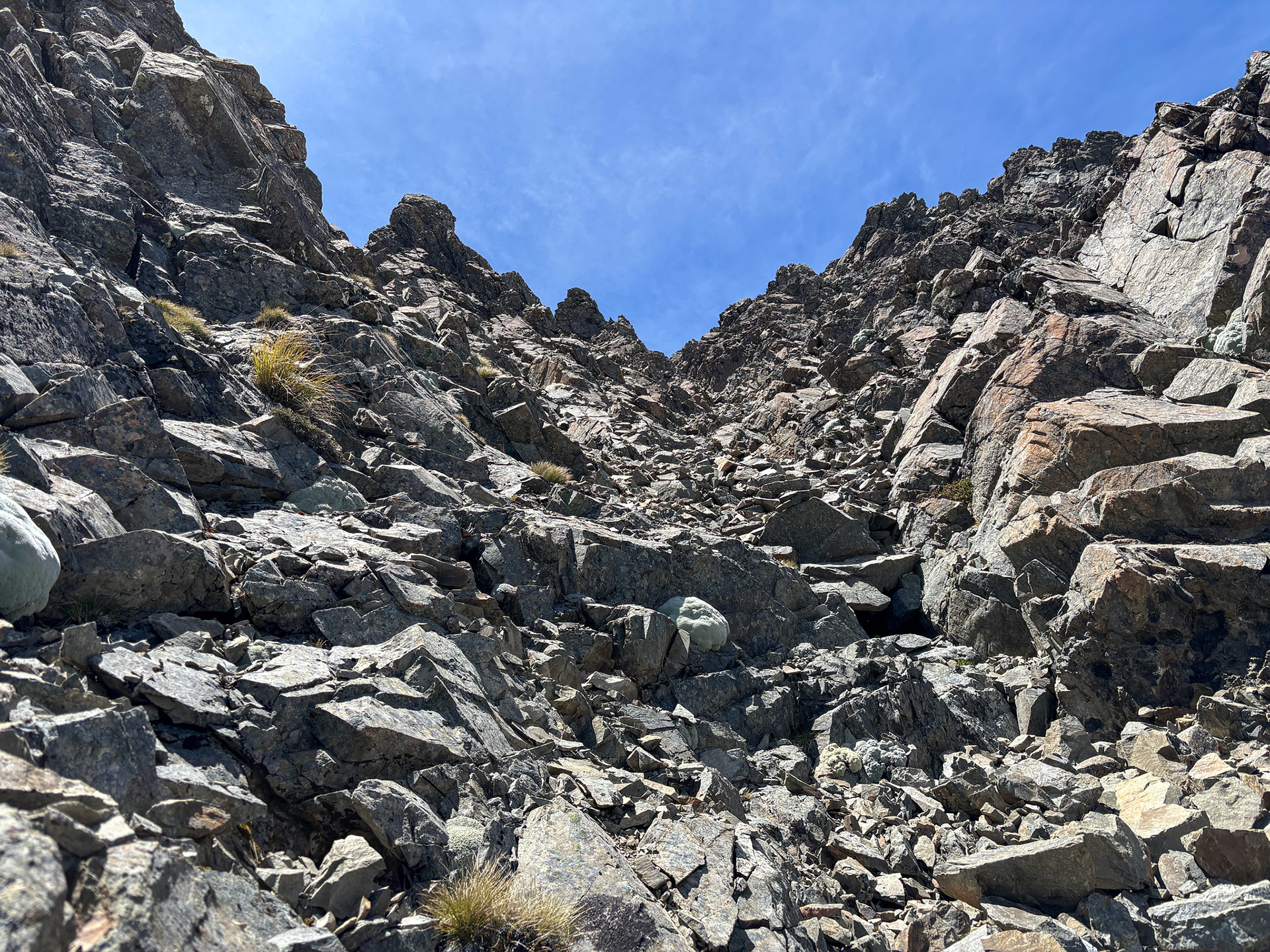
Broken rock debris low in the gully.
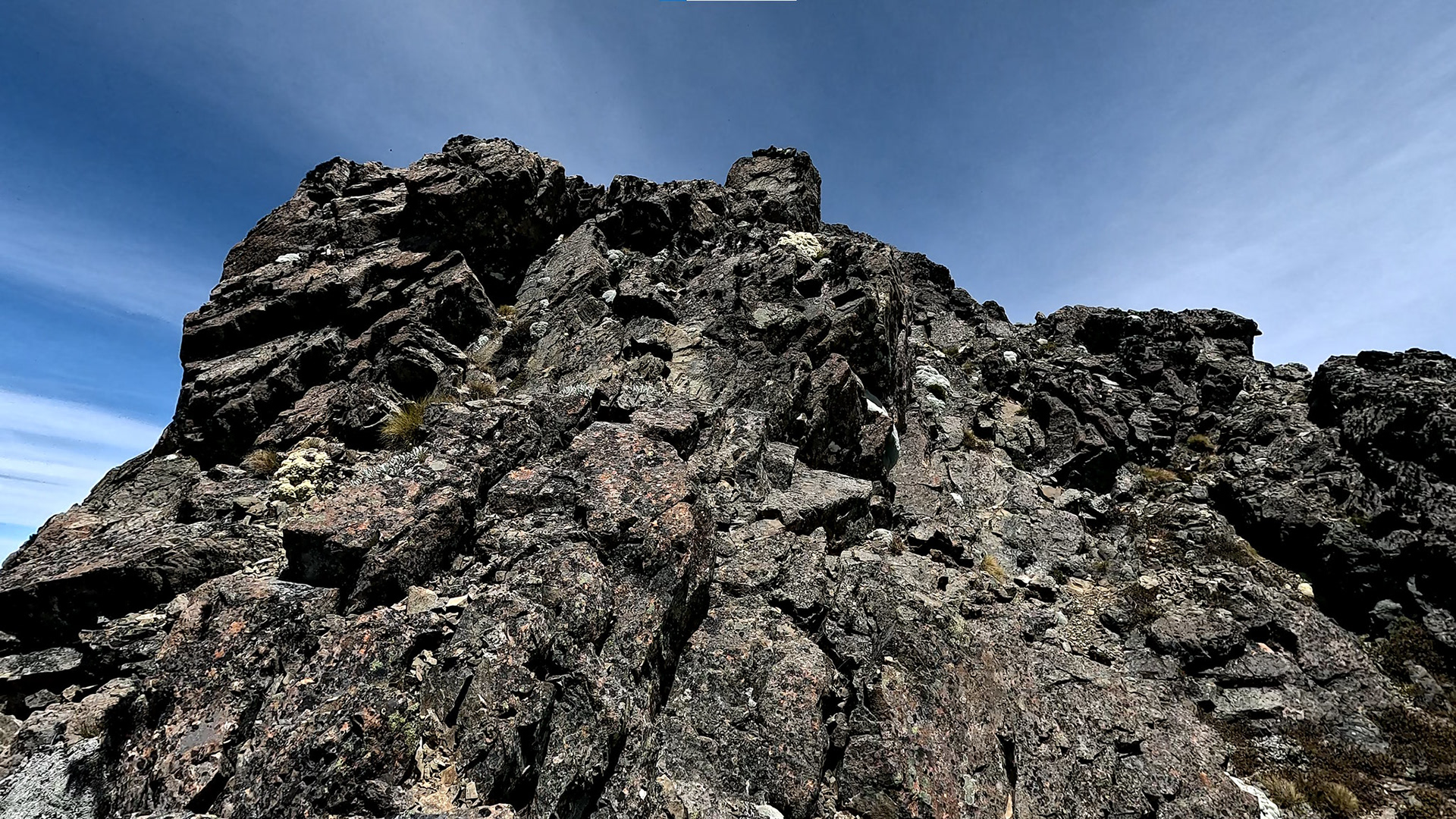
From the upper notch, there's a stomach-churning drop into Pinnacle Stream on the far side. Trying to climb the north ridge directly was a bit too intimidating for me, as there's a drop into a secondary small notch (with steep gulches either side) and then a blank-looking gendarme to surmount immediately after. Fortunately, poking around to the right yielded traversable terrain. I think in theory, you could strike out across this and find a less exposed route through the upper bluffs, but I just used the angled ledge to bypass the initial gendarme and migrated back onto the ridge proper. The remainder of the climb is short (about five minutes), but it's big blocky terrain and some of it quite exposed. Fortunately, the handholds are plentiful and the rock quality good, and I soon encountered a smattering of tussock and then the summit.

A GoPro snip of the summit ridge travel.
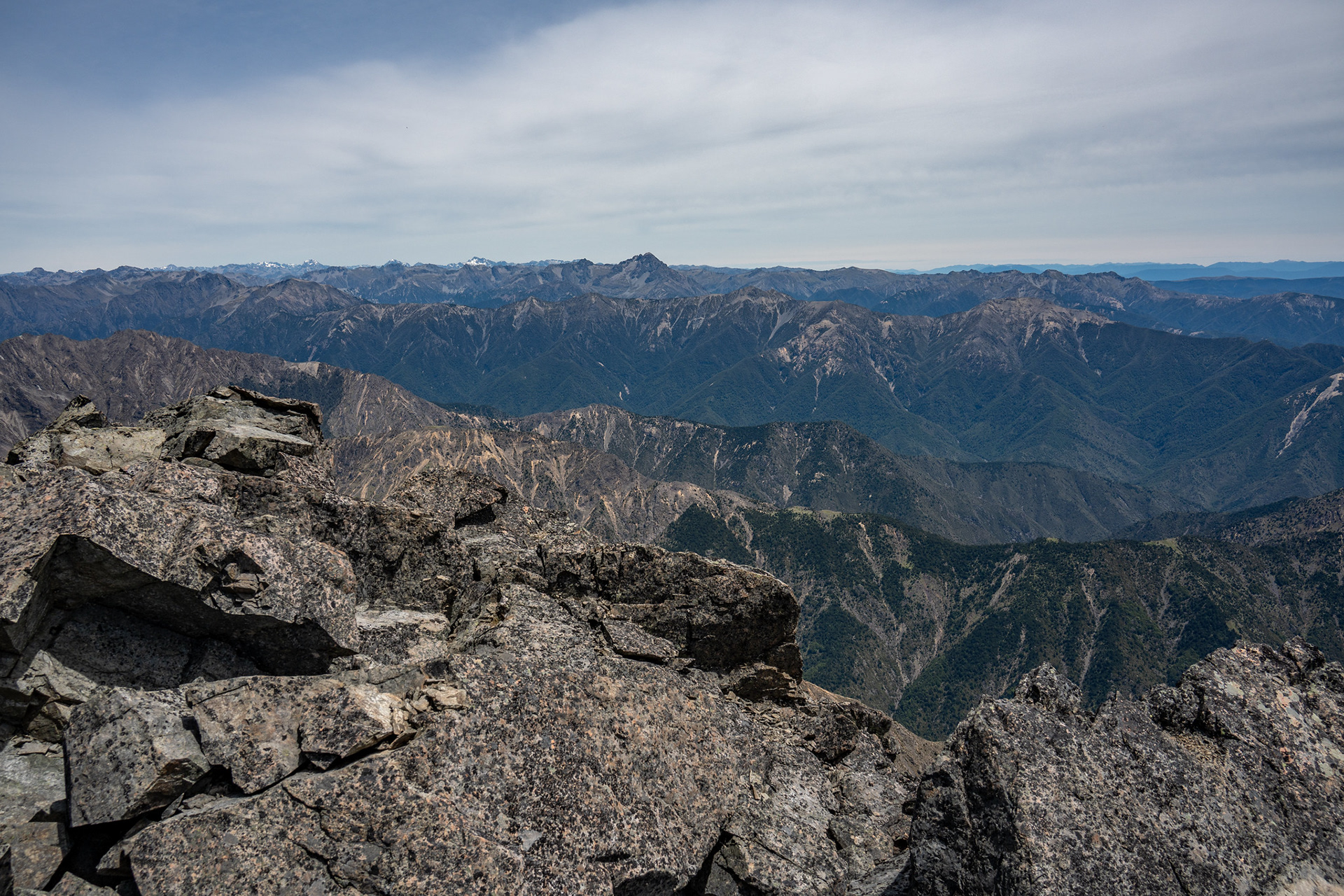
I'm not really sure how to describe the summit views from Pinnacle. It is a very prominent peak so you can see in basically all directions, but it's also one of the few rugged summits in the area so there is a lot of benign high country abutting. You can see the Nelson Lakes peaks in the very distance and Scotts Knob and Bounds are notable in the vicinity, plus Tapuae-o-Uenuku / Mt Alarm are easily discernible if you squint. Closer to home, it's the mostly barren upper Waihopai along with the breadth of Boulder Stream. The summit area itself is moderately spacious, so there is plenty of room to drop your pack and find a comfortable spot to laze.

A view northwest towards Scotts Knob and the Nelson Lakes peaks.
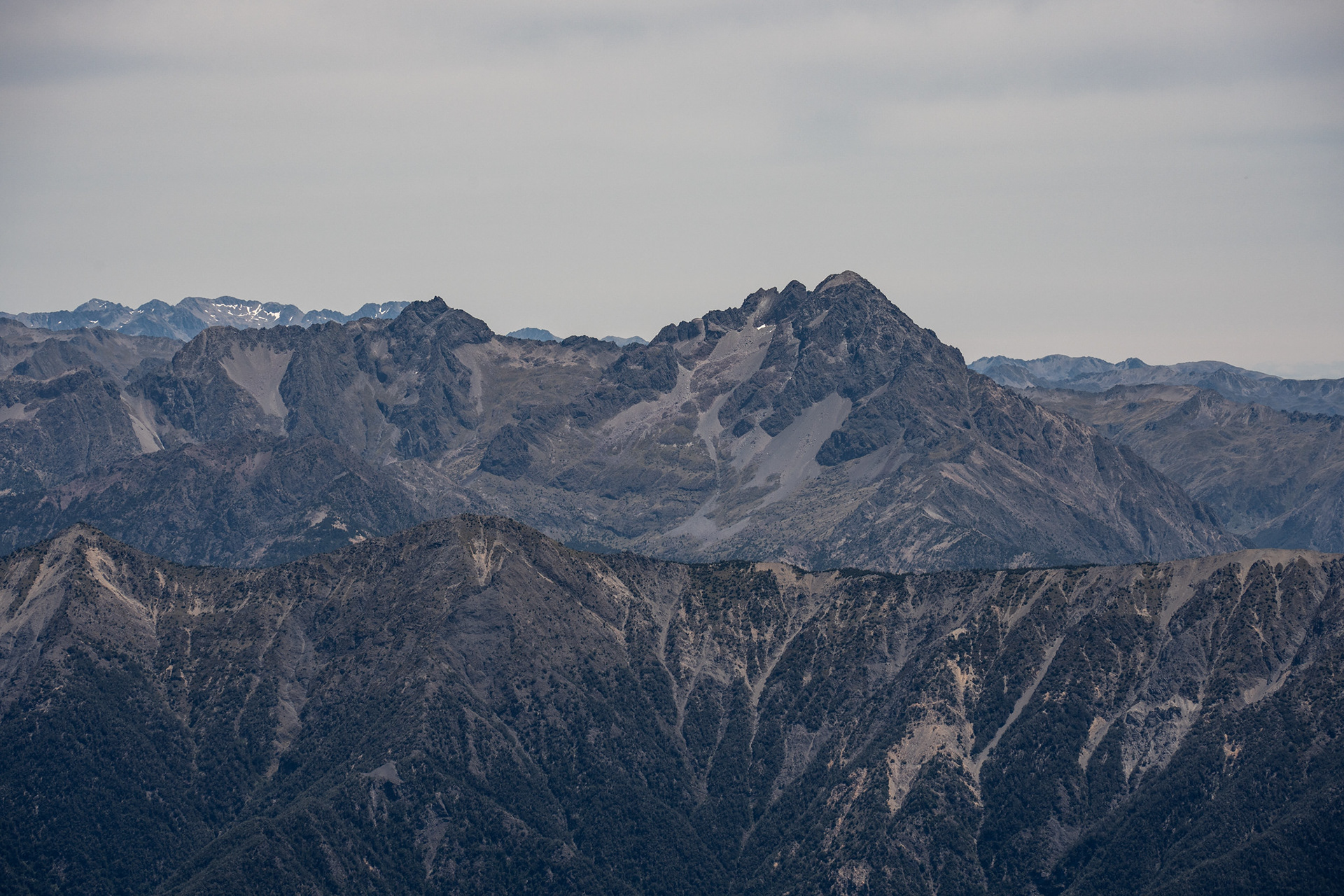
Scotts Knob.
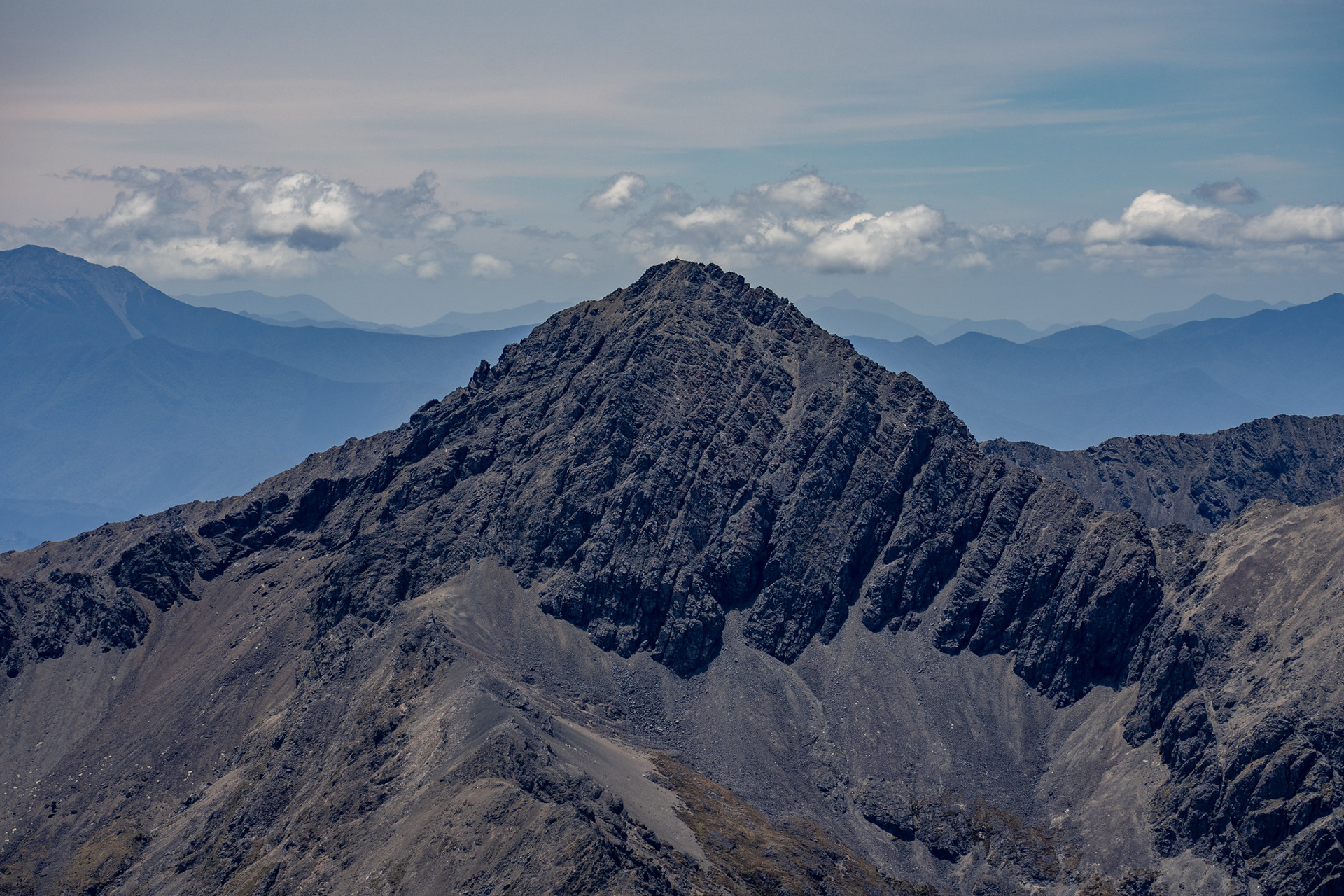
Bounds, its trig dwarfed by the bulky mass of the peak.
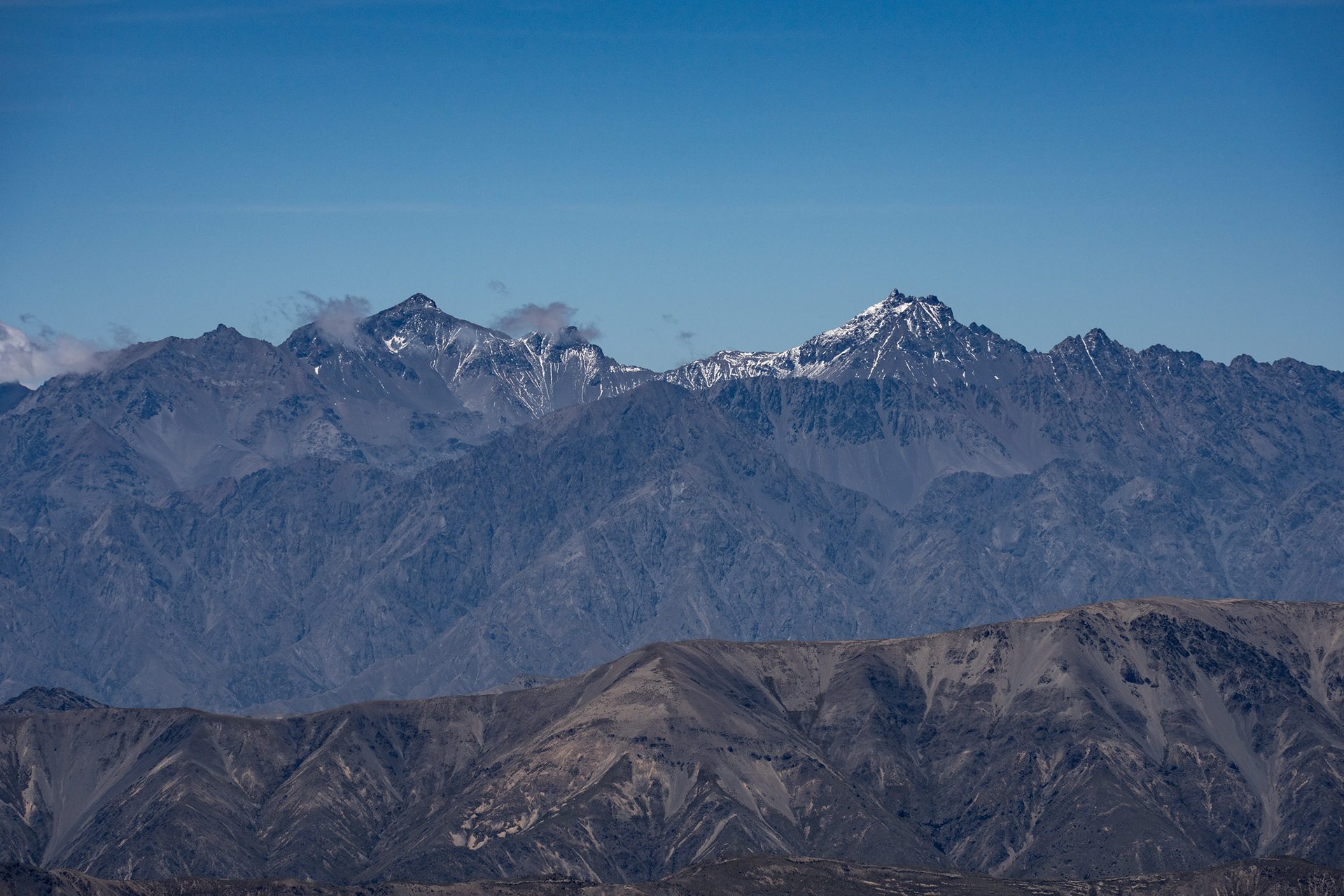
Tapuae-o-Uenuku (left) and Mt Alarm (right).
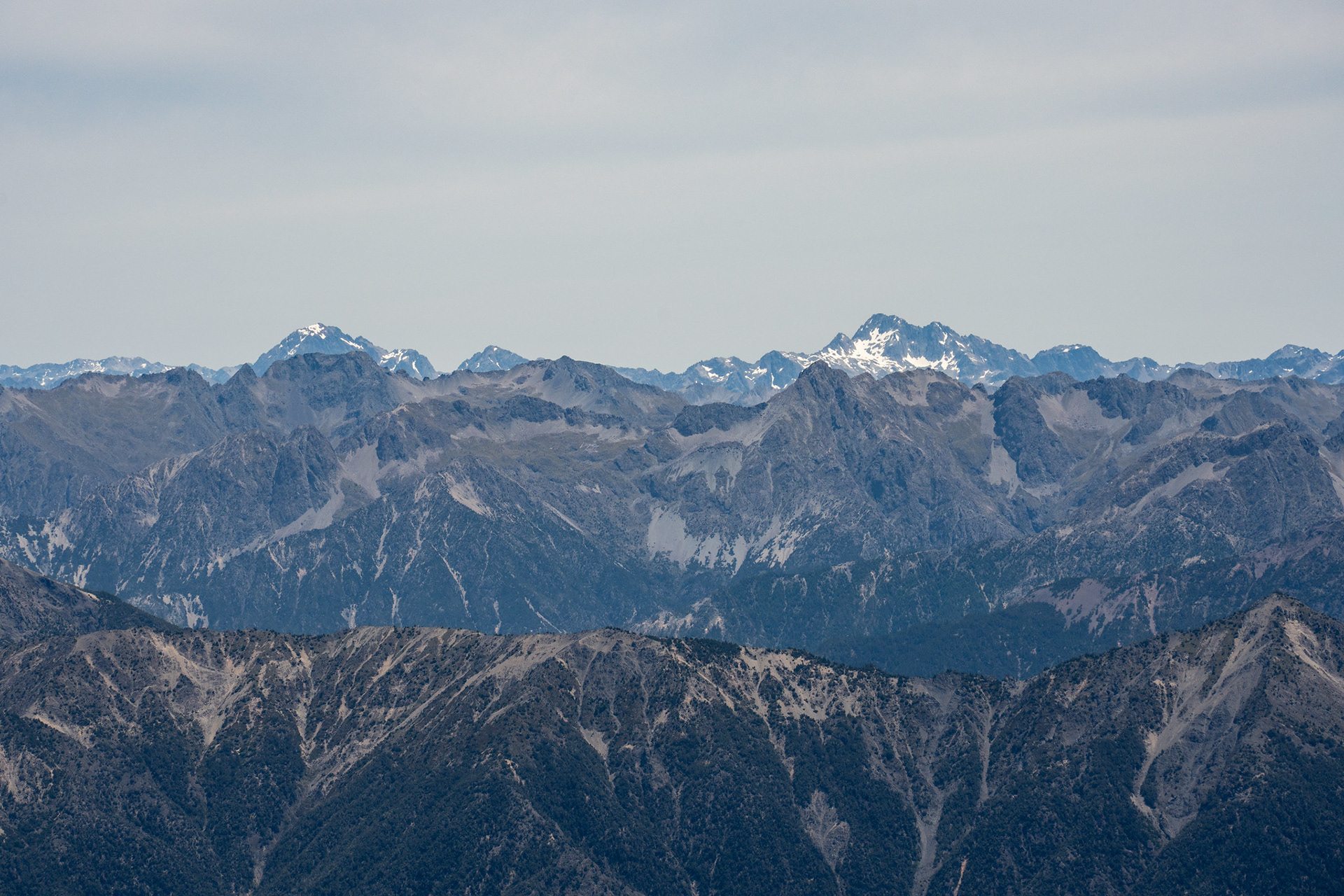
Very distant, Mt Cupola (left) and Mt Hopeless (right).

I didn't stick around long on the summit, I'd somewhat optimistically told Dad that I would be up around midday and it was a shade past 1pm. I was wary that I might get forced back down the rock gully if I couldn't get down into the upper Krushen Stream as planned, so a few snacks later it was time to amble off for the descent.

It's a bit hard to articulate how to get down into the Krushen, from the topo map it's obvious that the south and SW ridges of Pinnacle are quite cramped so there's no straightforward way to GPS the route. I remember reading many years back that other parties have dropped down a rock corner onto the scree below, so when I found a short gully in the vicinity I figured it would give a viable path down. It ultimately did, but it was a bit more involved than I had expected. The top gully leads down into a second more confined gut, which in turn spits you out onto a patch of gravel and then a large slab with a pinched corner to your right. The slab has gravelled ledges all the way down which allow safe-ish access with care, at which point you can descend excellent scree (avoiding the minor cliff bands) all the way down into the flats of the upper Krushen.
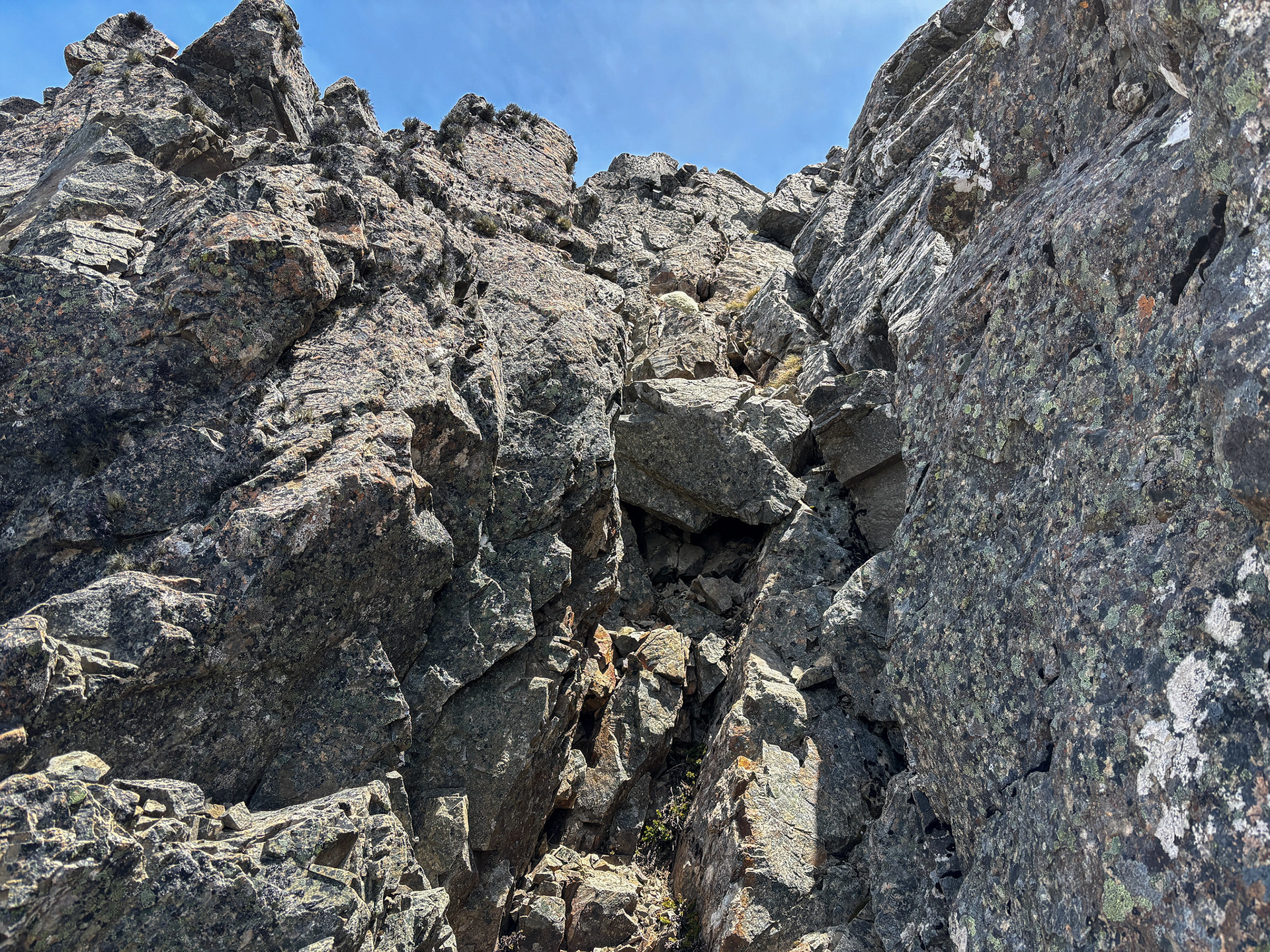
The upper weakness on the summit block.
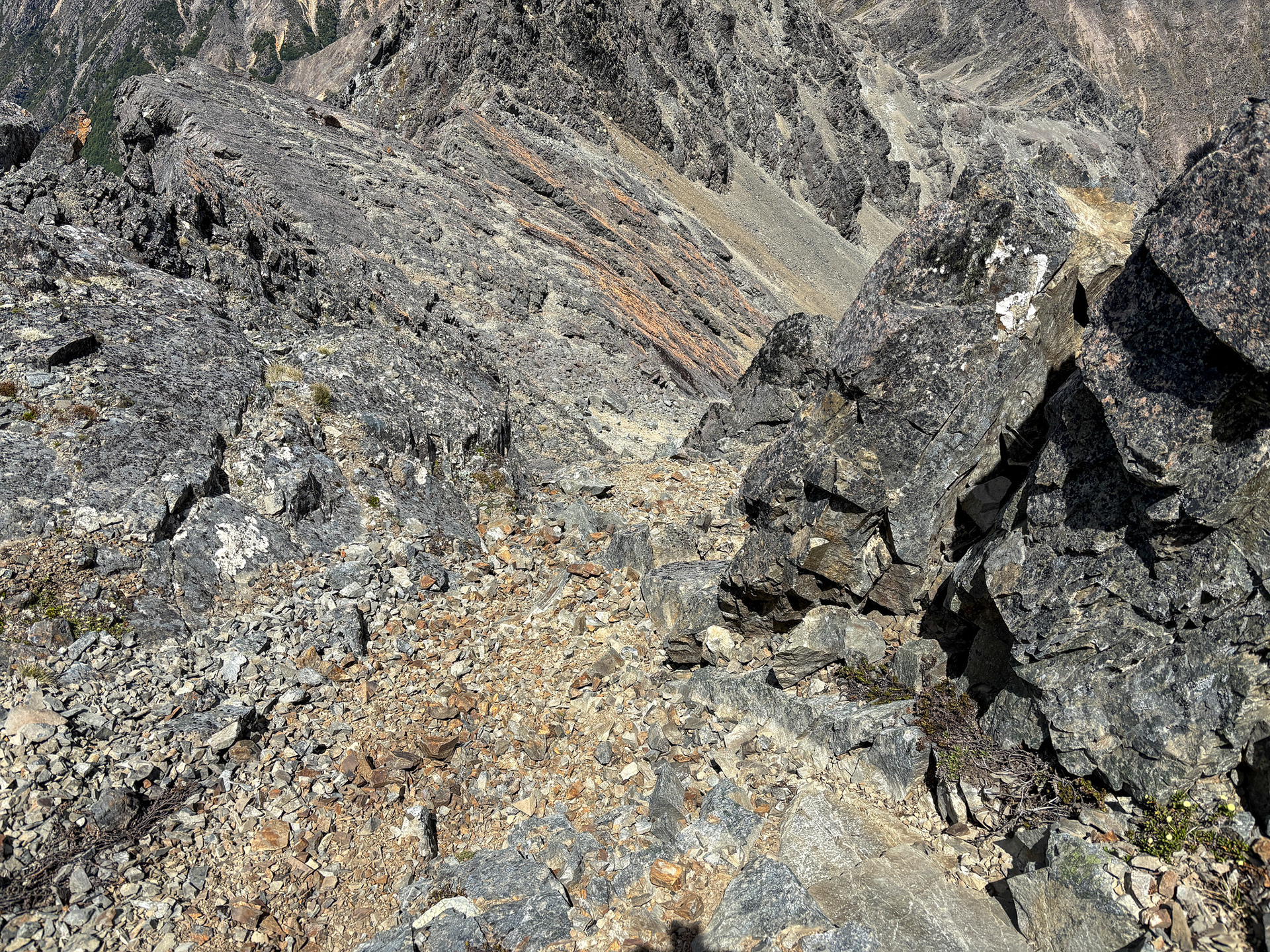
Some loose travel to break things up.
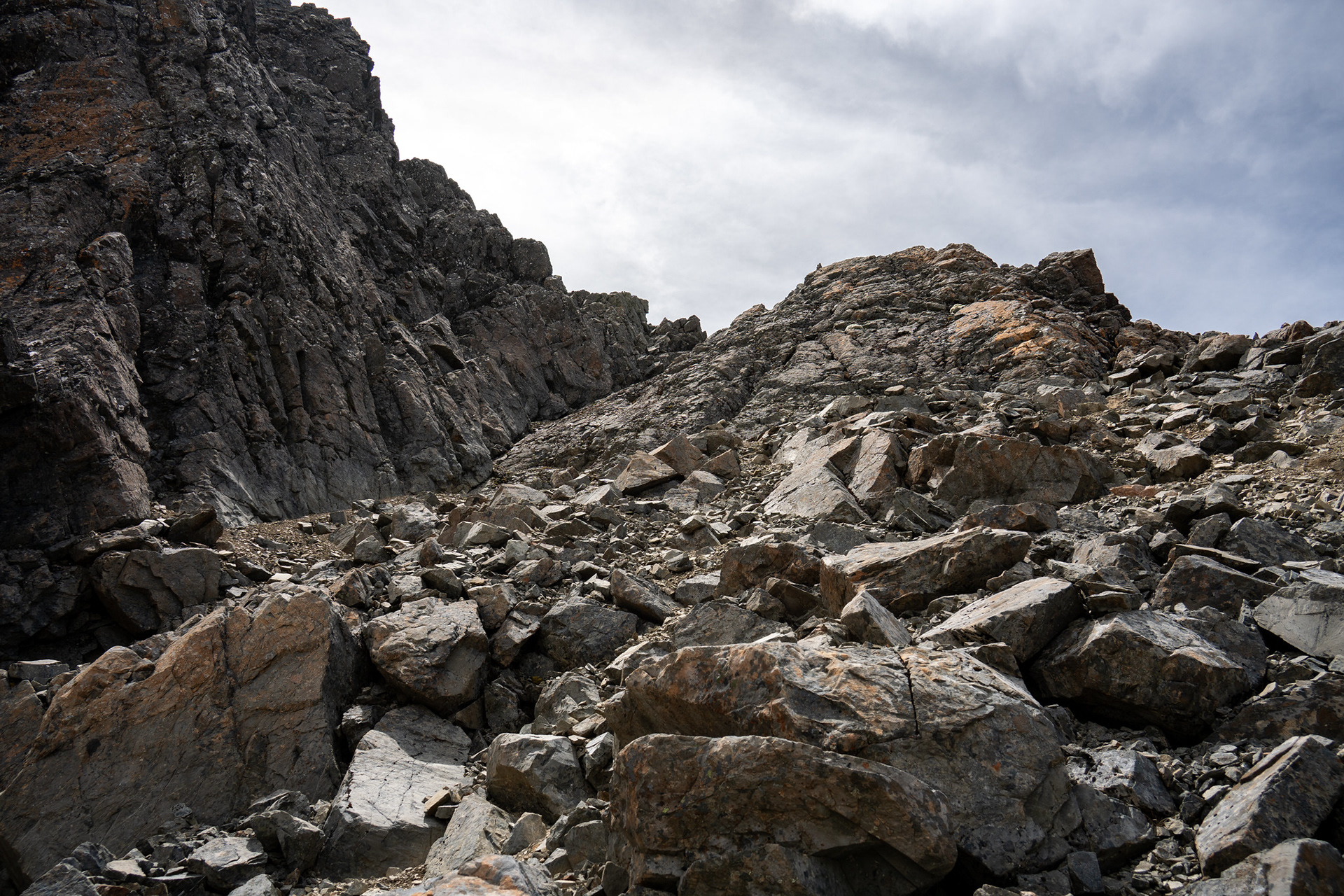
Back up the lower slabs which need to be descended.
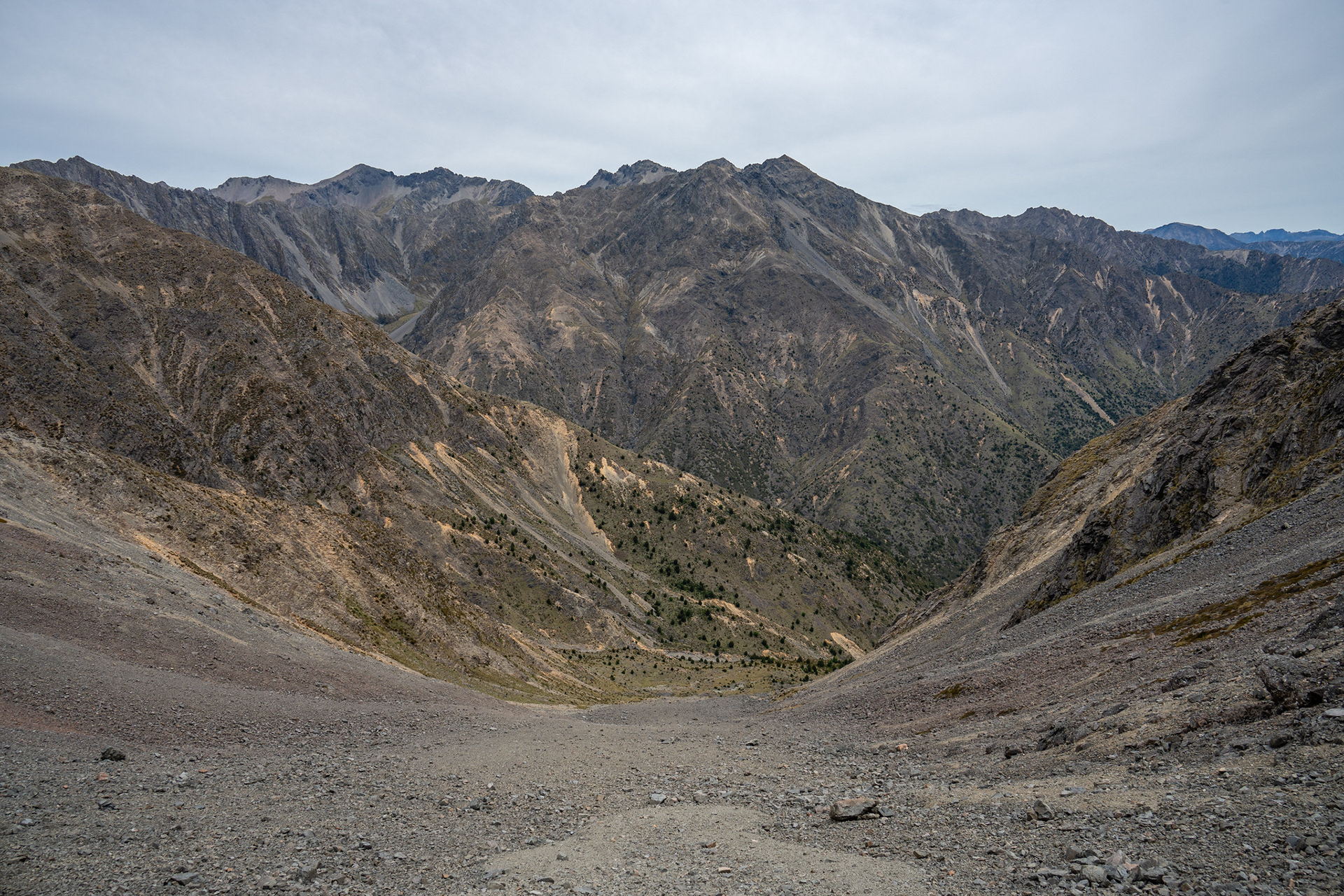
Stepping off the slab, it was a chance to revel in that knowledge that the objectively hazardous component of the climb was done and the only complexities ahead were routine tramping ones like the navigation and stream crossings. Reaching the tussock in Krushen was a neat experience, beautiful flat tussock fields and grassy clearings unfortunately interspersed with the ever-continuing ingress of wilding pines.

The upper Krushen Valley.

Back up the Krushen Valley, Pinnacle's SW face prominent.
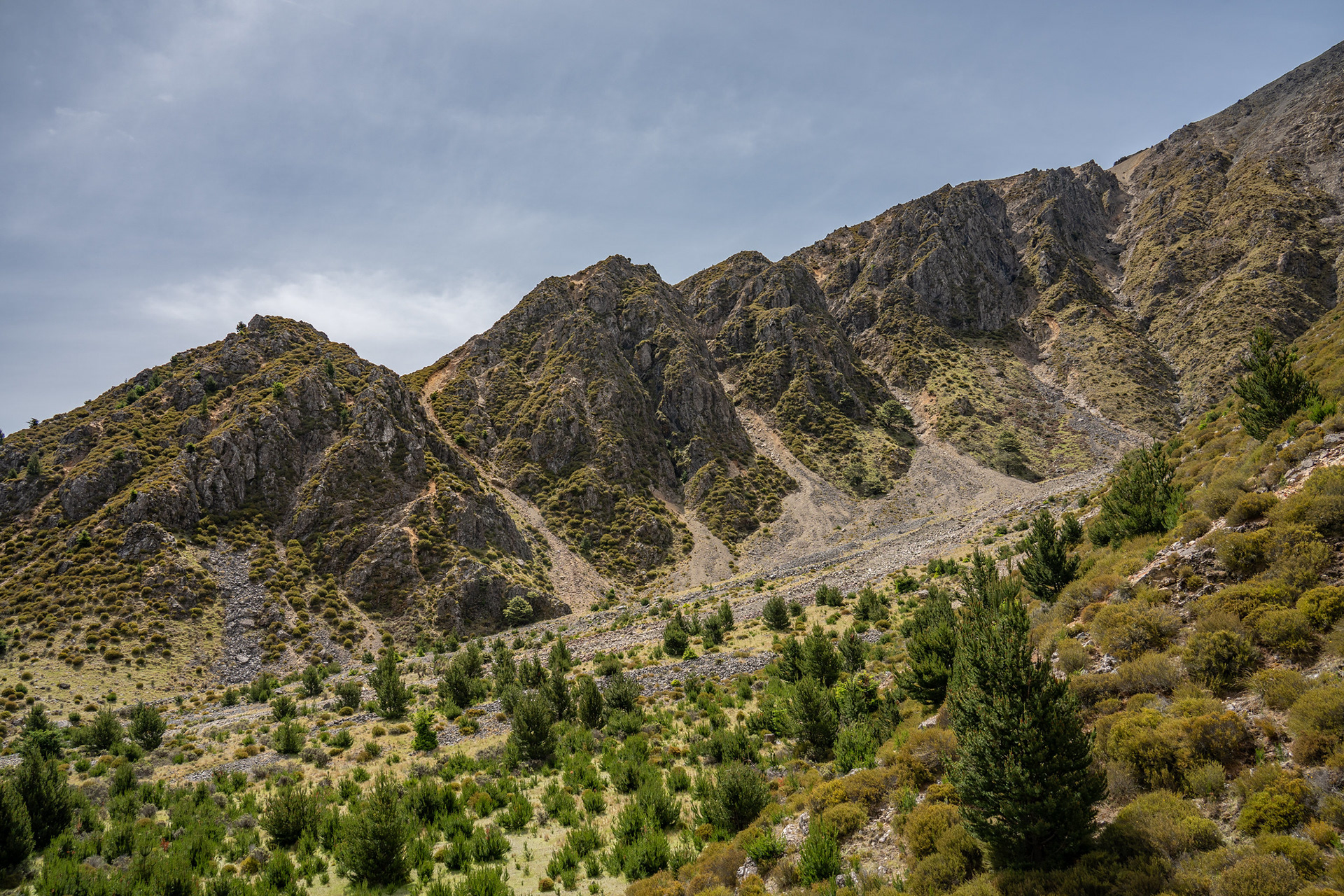
I'd studied the satellite imagery prior and decided it was best to sidle the basin high on the true right, which proved to be a good choice albeit still presented complexities. Around BS26 2098 6957, the open margins closed in and I still needed to find a way down to the flats below. I ended up just bashing through immature pines and rockfields, swinging right to enter open beech forest after maybe half an hour of travel. Another option could be to climb high over the bounding ridge and drop down the rockfall on the other side, though there's no guarantee you won't hit freshly grown pines on the latter route.

Beautiful pinnacled ridge as the day marches on.
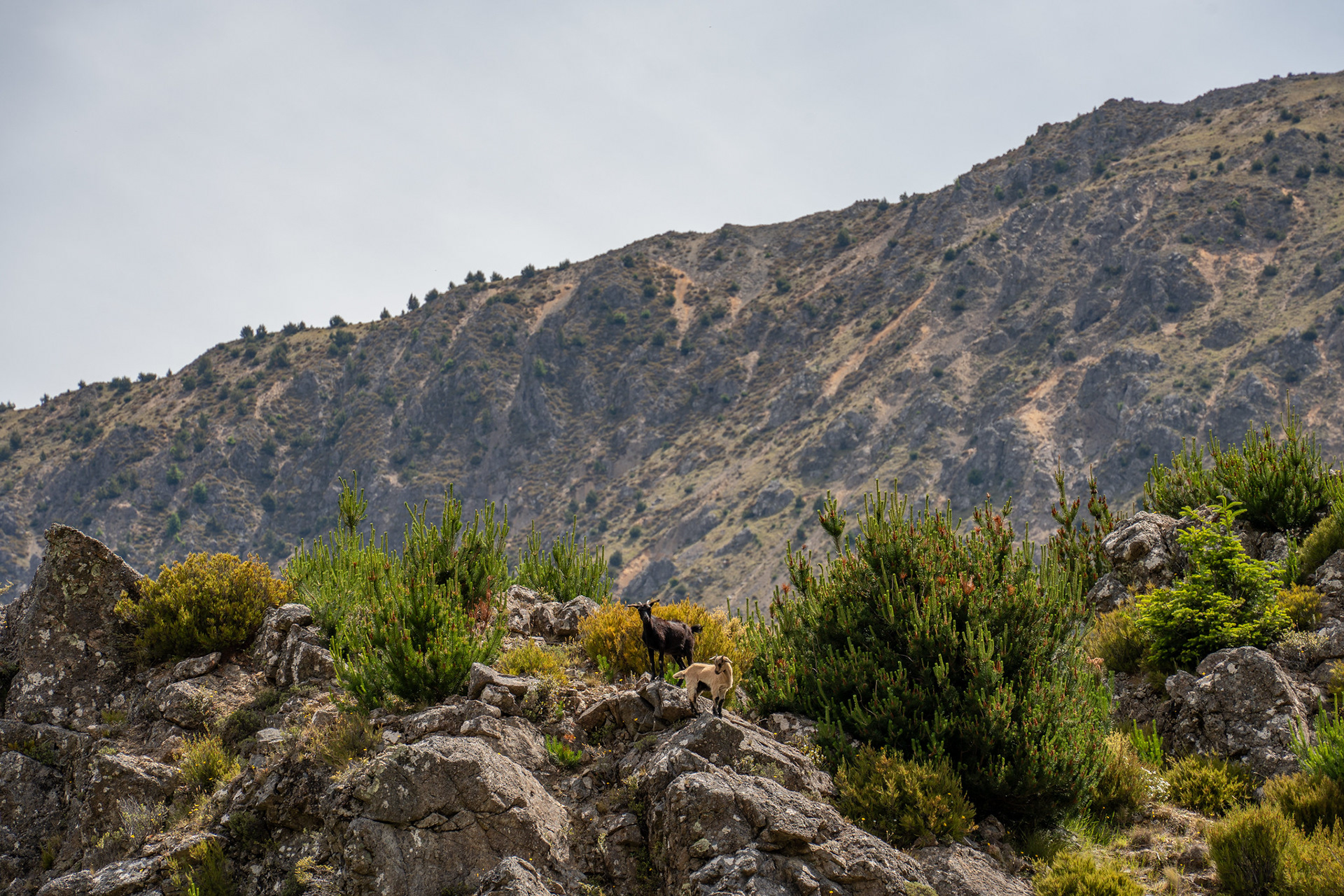
A little bit of company as I prepare to drop into the bush.
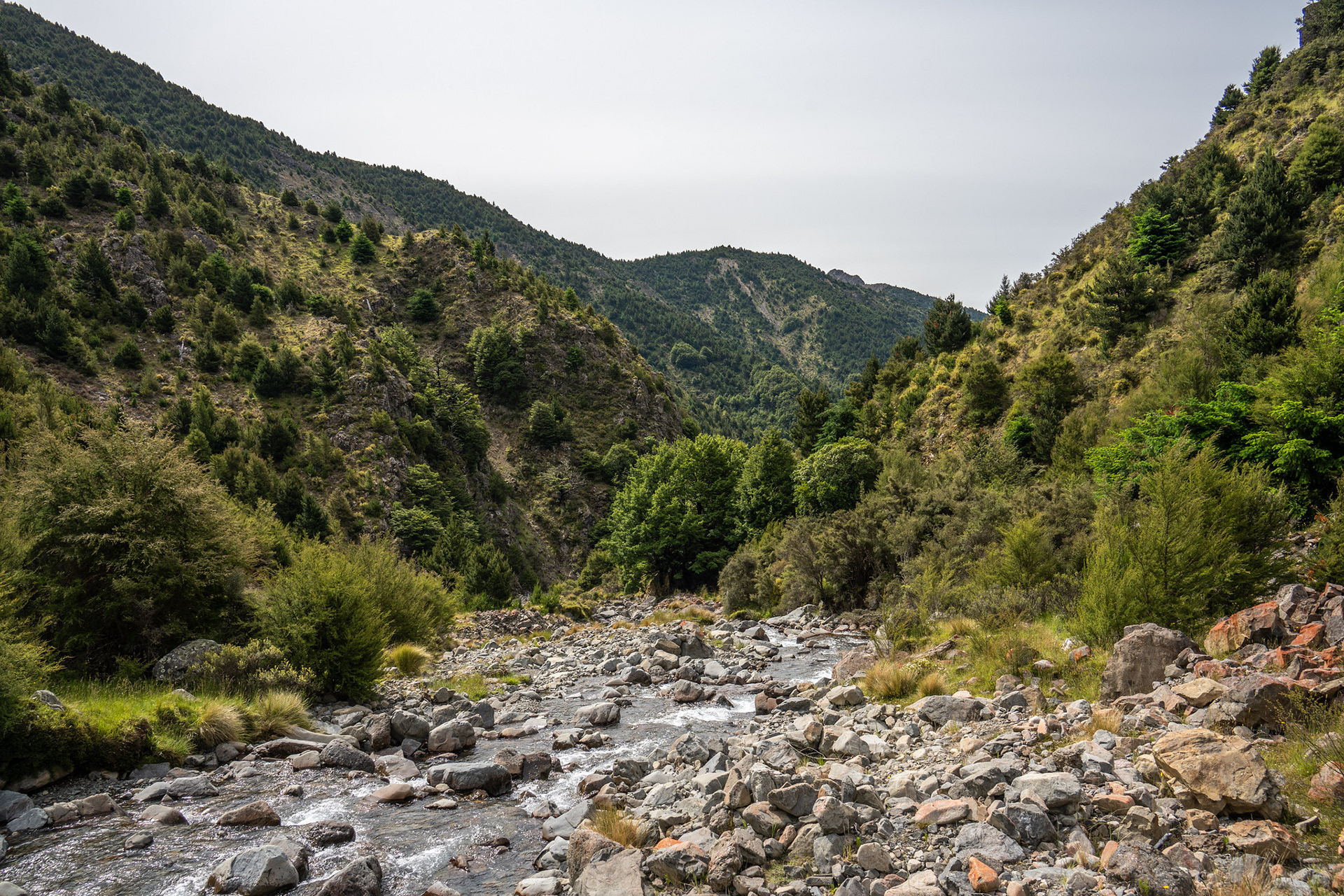
Breaking out of the beech forest, it was a bit unfortunate to encounter more masses of wilding pines and constrained travel. Fortunately, swinging right (away from Boulder Stream) gave open travel, and a few linkages later I was back on the banks of the stream and it was back into river travel. The banks are mostly very open bar one or two confined sections, and it took scarcely an hour to cover the 5km or so back down to Boulder Forks Hut.

The forested section of Boulder Stream, lovely travel.

At the hut, it was time to change shoes and sign the hut book again on the way out. All that was left was to ride the 5.5km back to the Leatham carpark, replace the car tyre that must have punctured on the drive in and then head back to Blenheim before the rain arrived that evening.

Trip Notes

* Pinnacle is realistically on the cusp of the tramping / climbing divide, the High Pathways guidebook grading it a 2 on the Mount Cook Scale. Realistically, it's more technical than something like Tapuae-o-Uenuku (1+, another popular climb in the general area), plus has more elevation gain on its summit day and also presents greater risks around rockfall and exposure. Some of this is balanced out by the very short approach, with a lot of parties just driving a high-clearance 4WD to the hut whereas Tapuae-o-Uenuku has a half day approach up the Hodder Valley.

As a wider comparison, it's also more technical than peaks like Mt Cupola (1+) and Mt Taranaki (1-) and of the same difficulty as the easiest routes on Mt Aspiring and Mt Barth. That being said, the commitment factor is much less than those peaks. There is no glaciation to cross, no crevasse or avalanche risks (in summer) to mitigate, no full-day approach required just to get to the climbing base. 

* There is significant rockfall risk at various points, so wearing a helmet if you have one is advised. The climb is probably easier in winter when consolidated snow infills the rock gullies, though it also introduces avalanche risk.

* The exposure on the summit ridge is moderate, there is at least one section where a half metre left would put you hundreds of metres down into Pinnacle Stream and a half metre right would see you tumble 50m or so back into the Boulder catchment. Fortunately the rock quality is mostly very good, and the climbing secure. If you do struggle with heights, taking the central gully on the NW face might be a better option as it hits the summit ridge south of the high point and has a much less exposed upper section. If you desperately wished to bag the peak with as little risk as possible, coming up Krushen Stream would limit the exposure to the half hour or so it takes to climb the slab and two gullies without any risk of falling into the Pinnacle catchment.

* Timing wise, be realistic with how long you allocate in light of your competencies. For fit parties moving well, it's very feasible in a day - it took me a bit under 9h for the 2 x bike rides and summit loop, but some parties have taken much much longer. One large combined party from local tramping clubs took 16h hut to hut, utilising the less exposed (central gully) route up and what would have appeared to be the more direct descent via the catchment immediately west of the summit. There is little shelter higher up, some sections of the feeder streams are gorged and the abundance of scrub and wilding pines means some travel is harder than the topography would suggest.

* Finally, the drive up Leatham Road is reasonably slow going. I took my stationwagon up past the '4WD only' sign to the Boulder / Leatham confluence, and paid for it with a flat tyre - the latter section has one stream ford and quite a bit of sharp rock. If you are planning on biking into the huts, it's probably worth just parking at the normal carpark and riding those last 3km which adds minimal time and might save you the tyre replacement at the end of the day.
You may also like

Back to Top