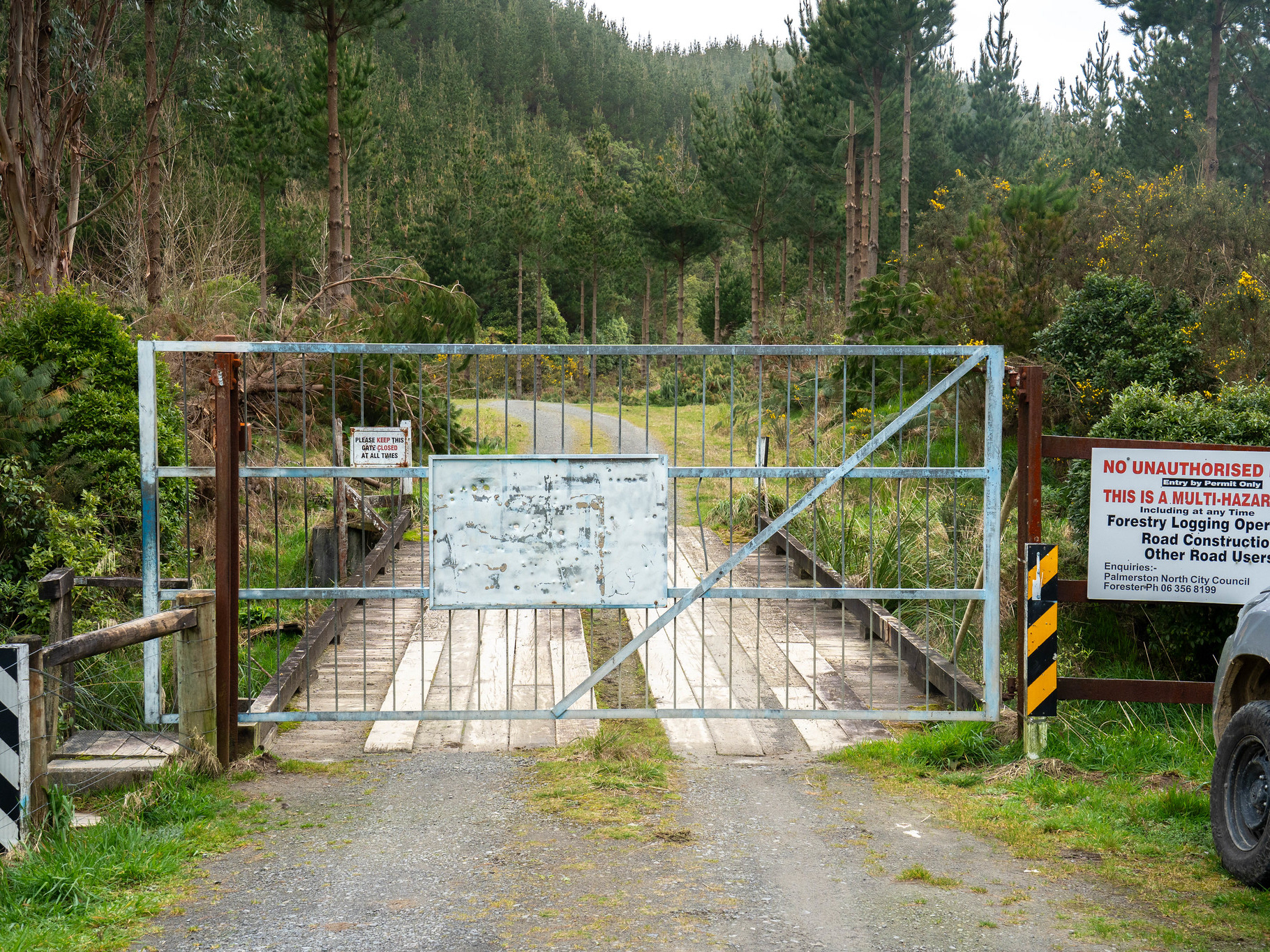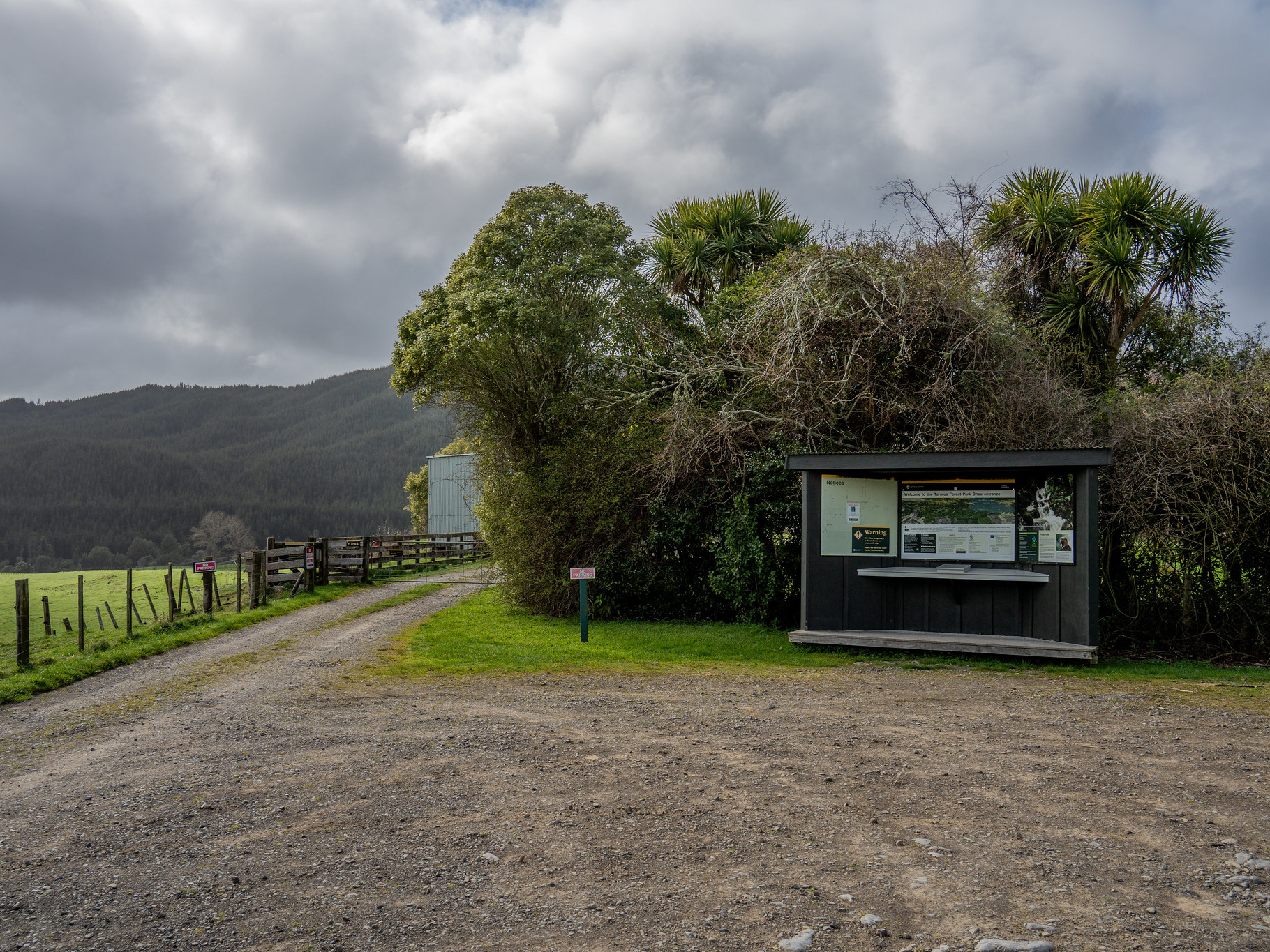
Kapakapanui is a smallish peak, an outlier of the main Tararua Range. One of the few fringe peaks to break the bushline, DOC advertises it as "one of the best viewpoints in the Tararua Range". That is probably a bit of an oversell, but it's an accessible summit, has the option of an easy day loop and has a cute 6 bunk hut tucked away for those seeking an overnight excursion.
After a lazy Saturday morning, I headed off around lunchtime for the trip south. It's about 1:15 from Palmerston North, with the roadend being tucked away inland from Waikanae. The township is probably a lot quieter now since the introduction of the Otaki Expressway and Transmission Gully, it's a reasonably clean run down. It's worth noting that simply asking for the Kapakapanui Hut on Google Maps will send you to Terrace Road (i.e. the wrong roadend), whereas searching for Kapakapanui Track will correctly point you to the end of Ngatiawa Road.
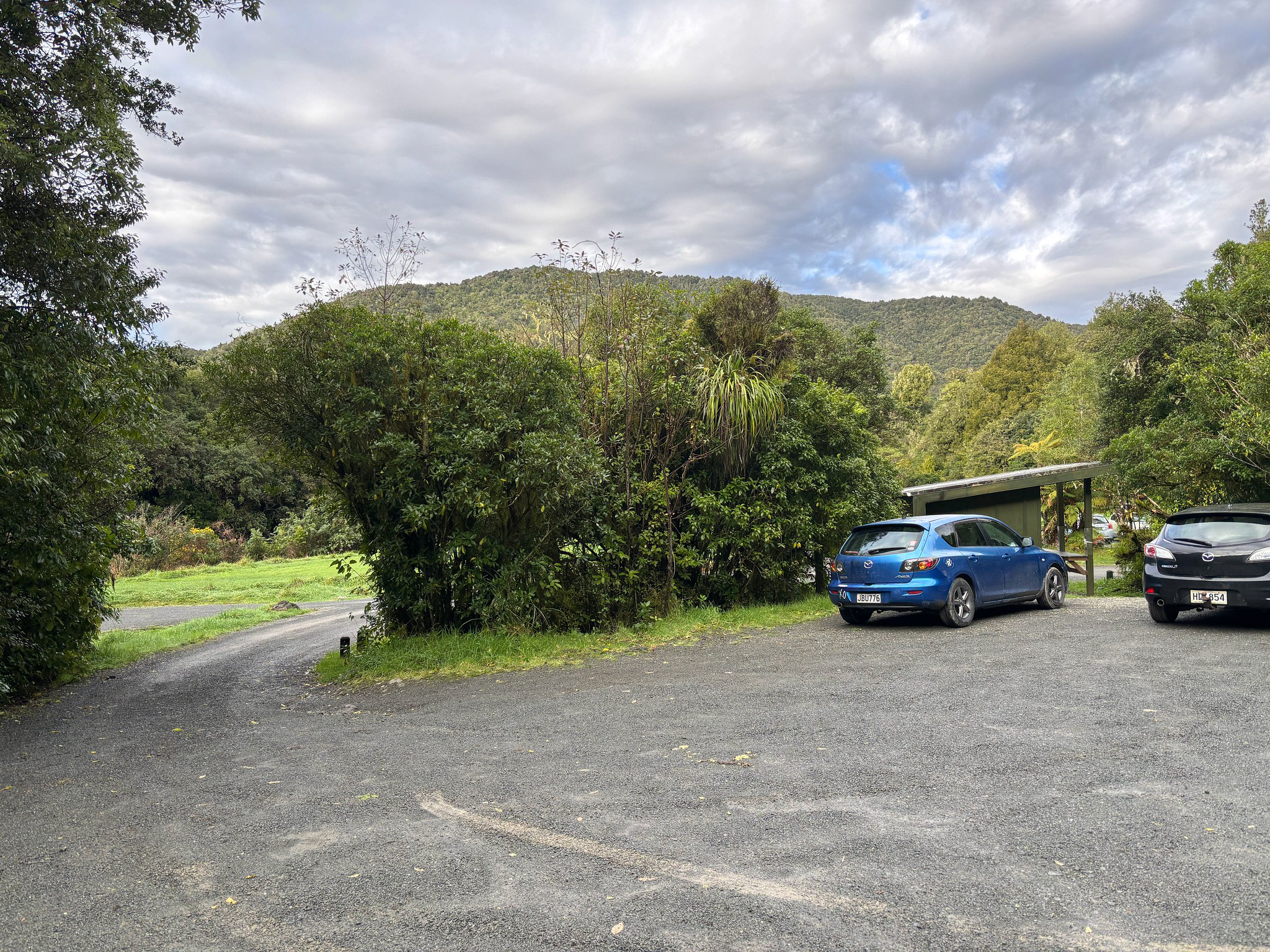
At the roadend, there were already about ten vehicles present so it was a bit of a squeeze. I assumed it would be due to the popularity of the day walk I was doing, though most of the cars were still there upon my return. Perhaps they were heading into the main section of the range via Maymorn Junction.
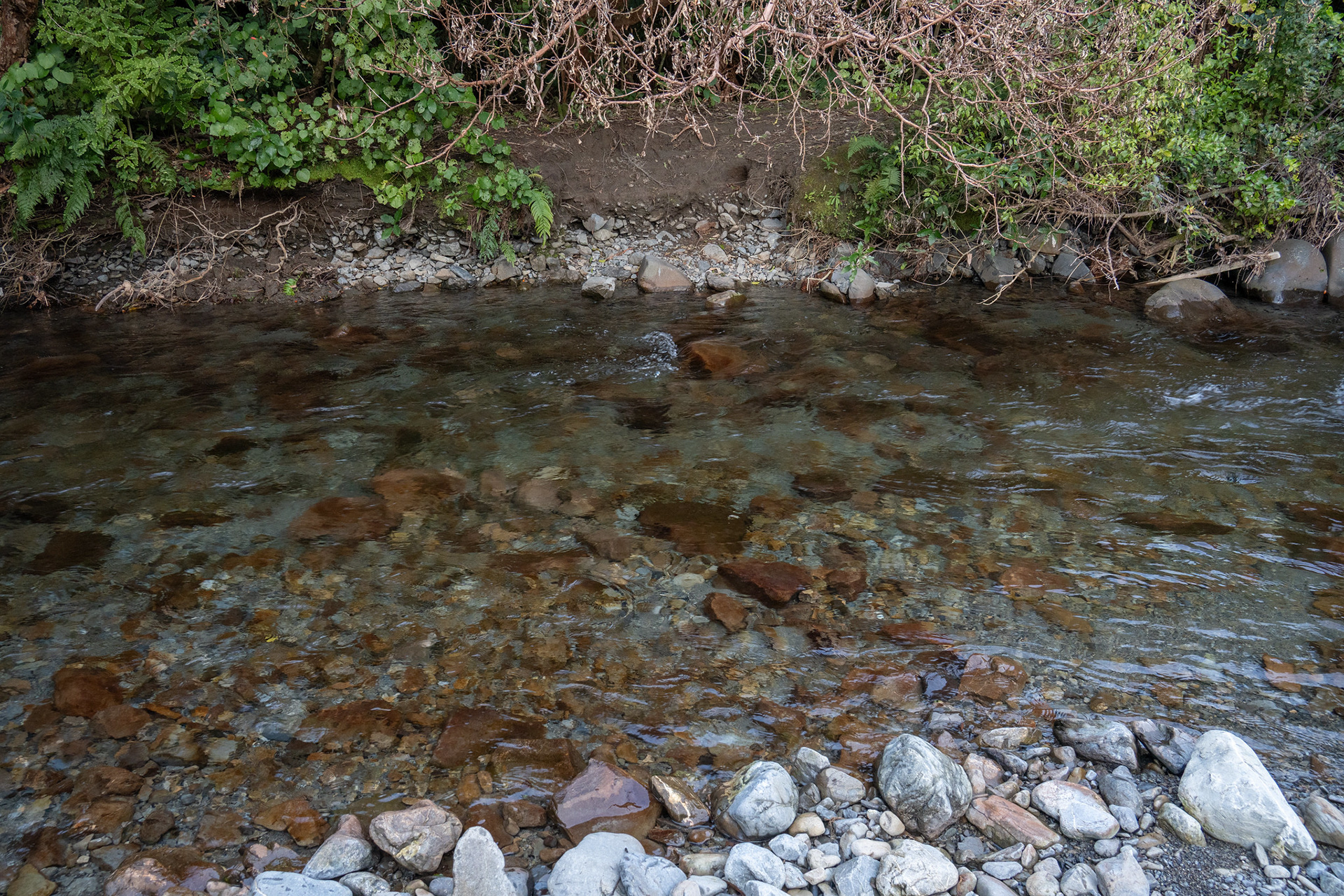
Heading out, the first section takes you through private land (access is generously permitted to foot traffic only). A short section on the driveway and then some pastoral land brings you to the Ngatiawa River itself, where the first crossing is made. It's not a massive river, but it's still knee deep in normal flows. A couple of young men were rescued from the crossing recently, after one got swept downstream leaving the other trapped. They were fortunately prepared with a PLB and rescued, but it does highlight the risks present in even moderate waterways.

The first of the Ngatiawa River crossings in typical flow.
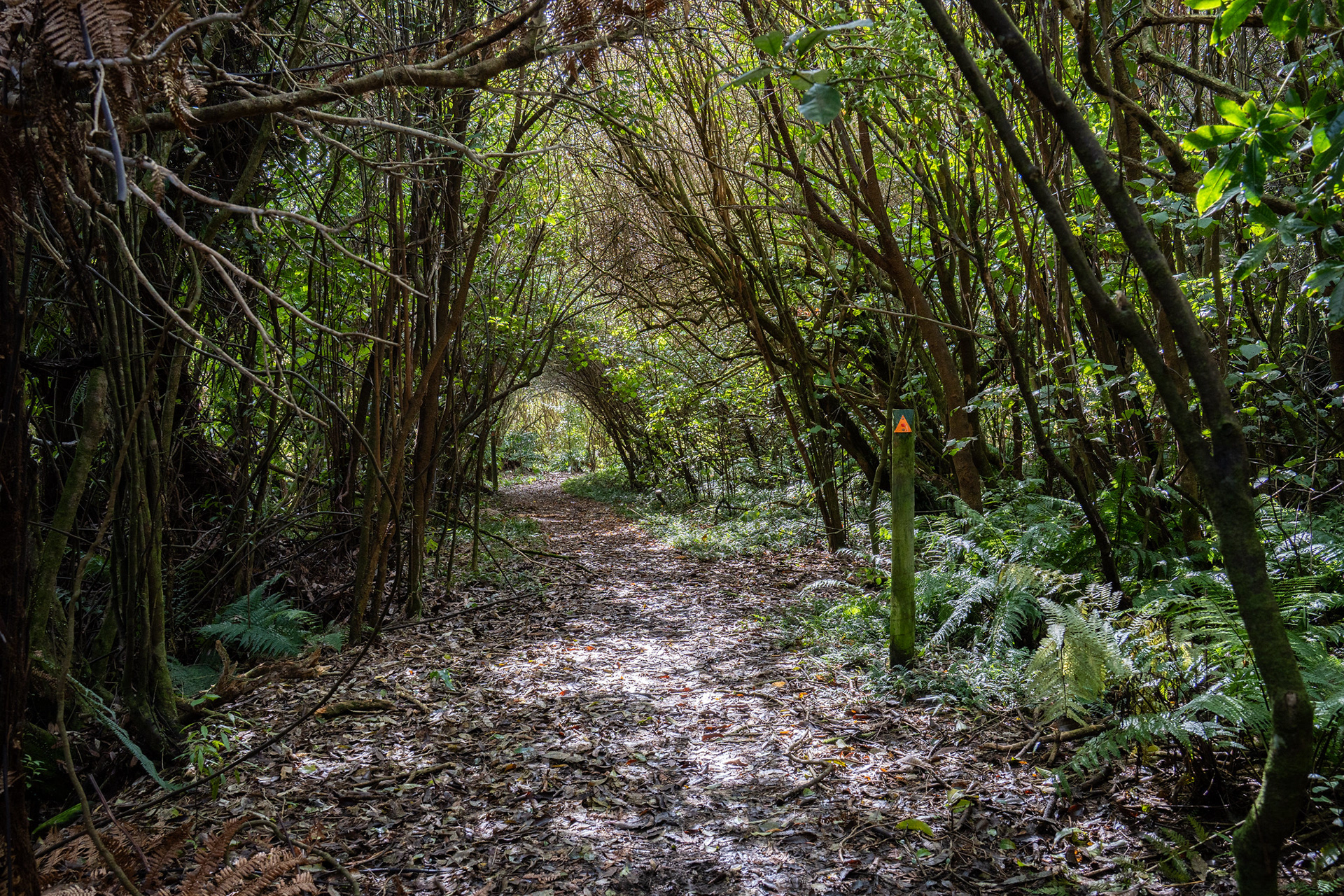
The early benched travel by the Ngatiawa River.
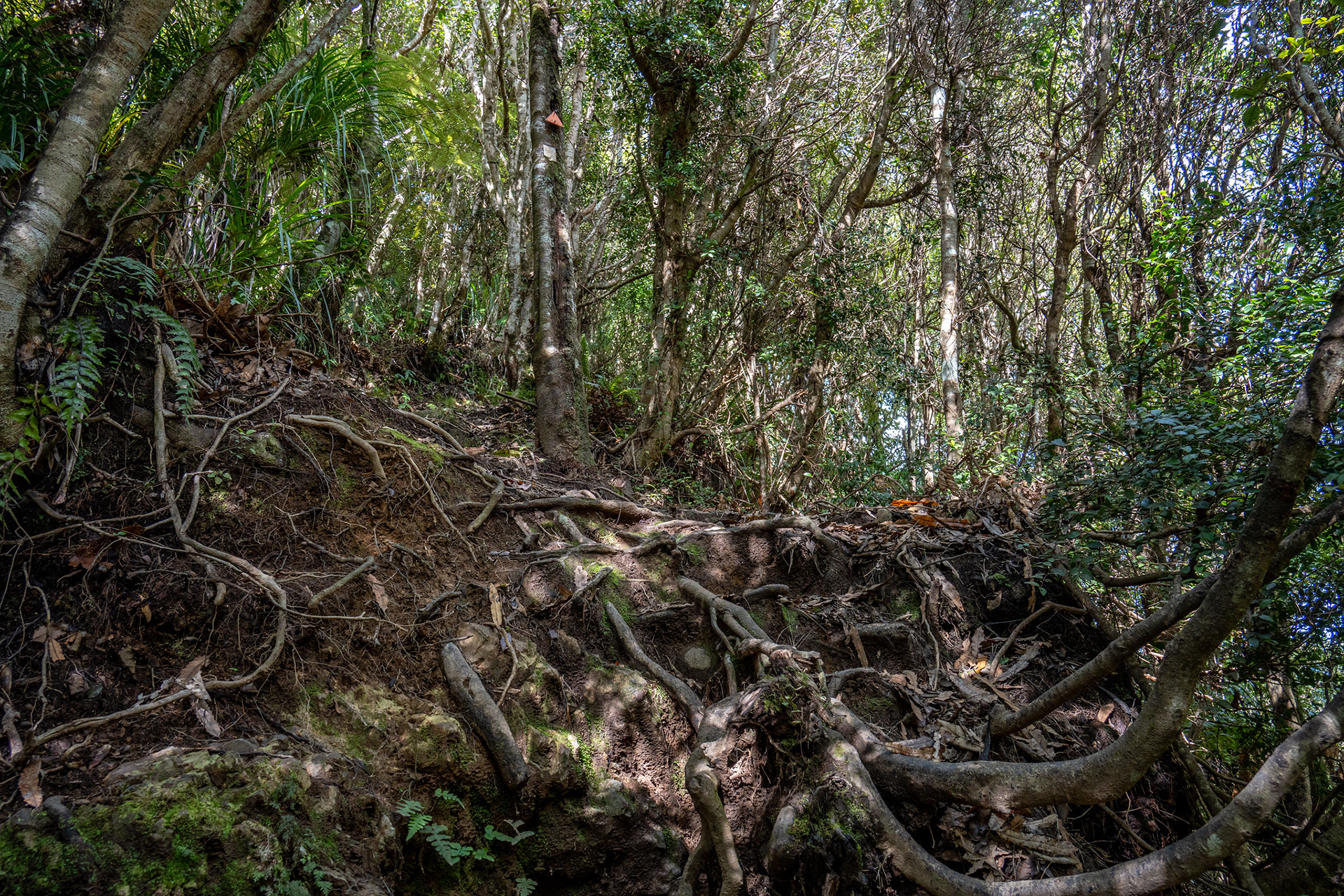
The river is actually crossed a further three times, though they get easier as you progress and the last one is across a tributary rather than the main flow itself. A kilometre in brings you to the track junction, where you have a decision to make. The right (anti-clockwise) direction has the steeper ascent and takes you to the trig quickly, which means you're back off the tops sooner in case the weather changes and makes for a lovely protracted descent. Alternatively, going clockwise makes for a short sharp climb initially to about 600m, and then an easy climb upwards over many kilometres to the hut and summit. If you're of reasonable fitness, I would suggest anti-clockwise for day trips and clockwise for overnighters, the latter offering a better elevation split across the days.
I headed anti-clockwise at the junction, striking out for pt. 852. The track is in beautiful condition and while punchy in places, never feels too difficult and there is plenty to keep you interested.

Some of the ascent is rooty, though most is well formed.
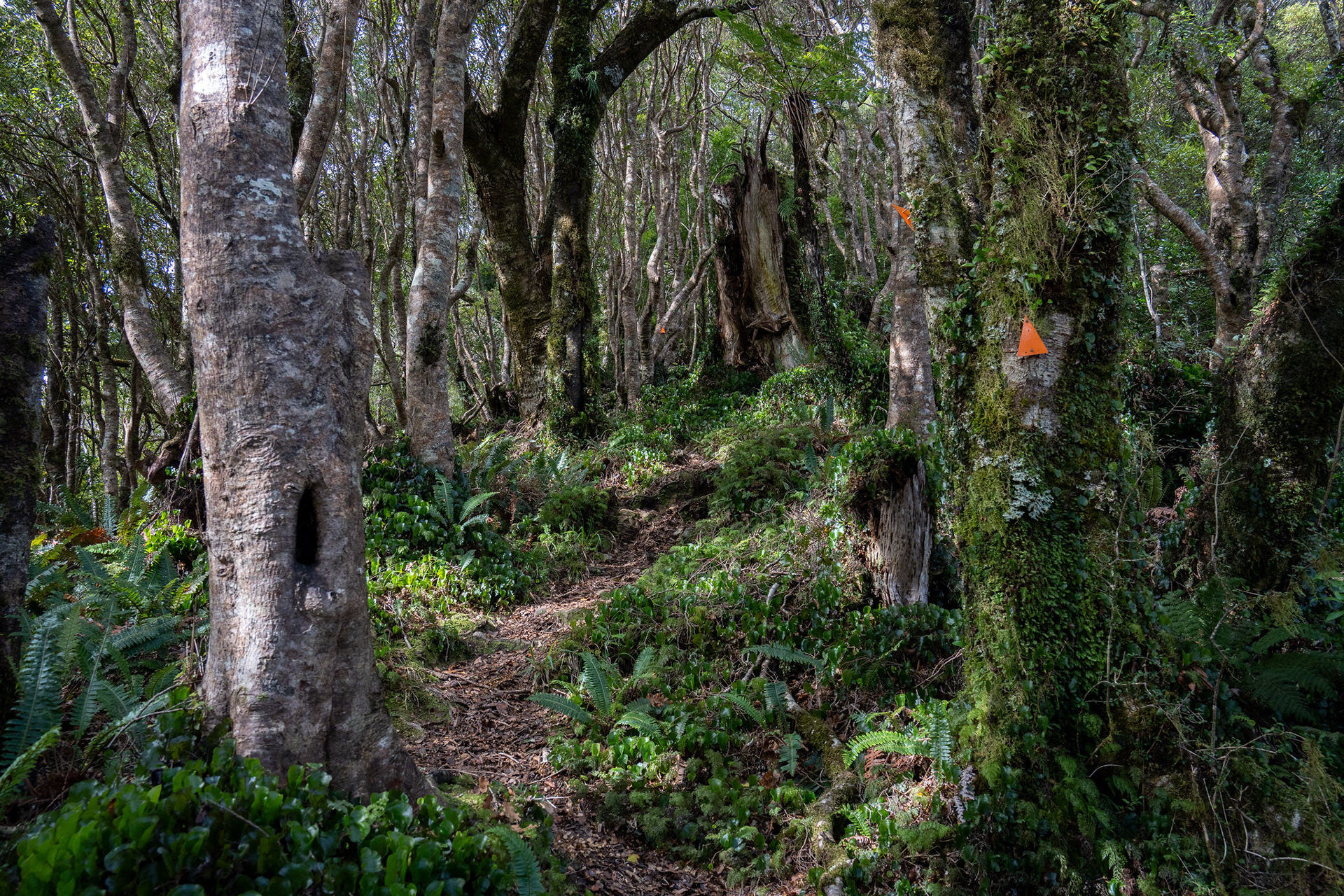
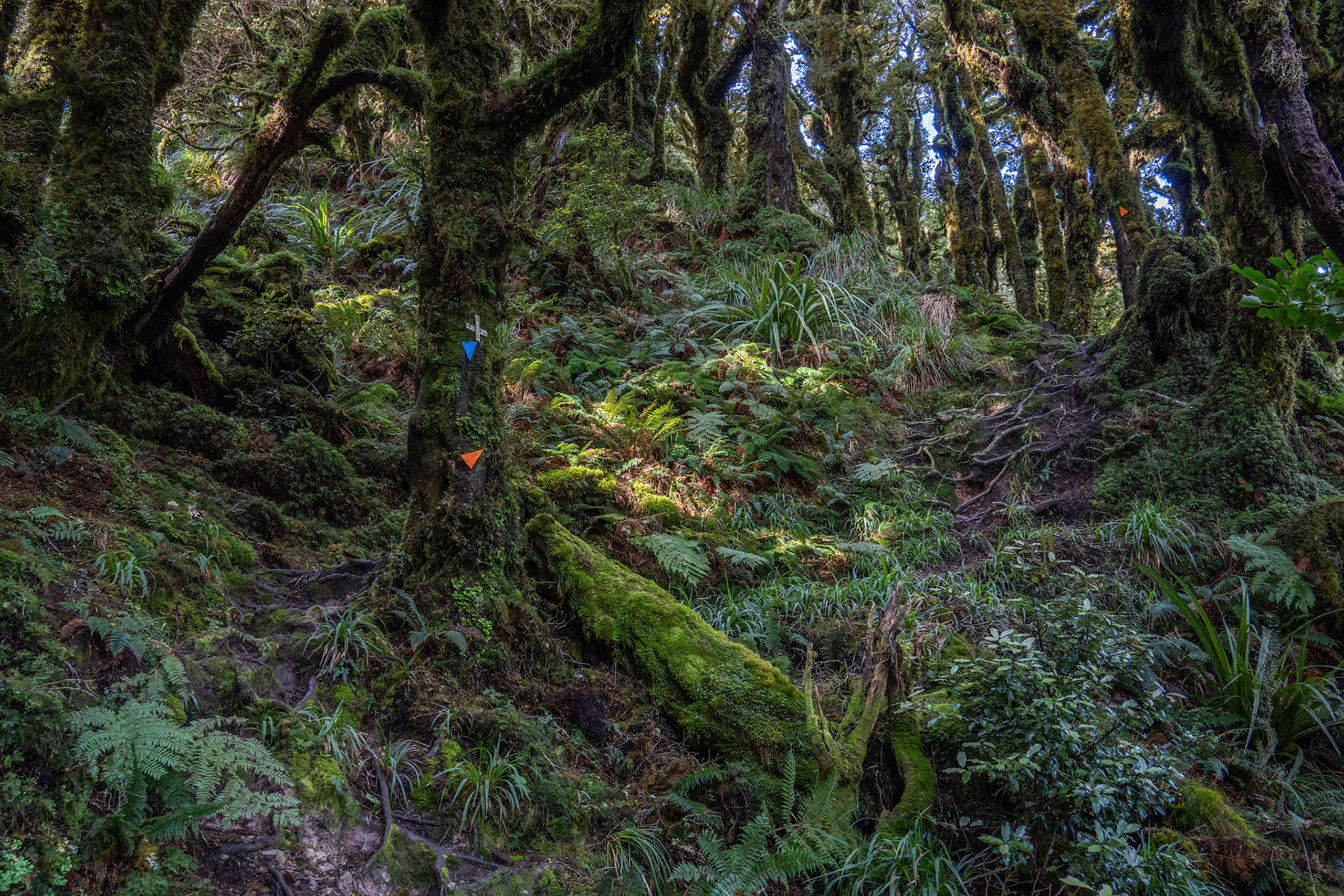
As the climb progresses, the vegetation becomes quite lush and mossy.
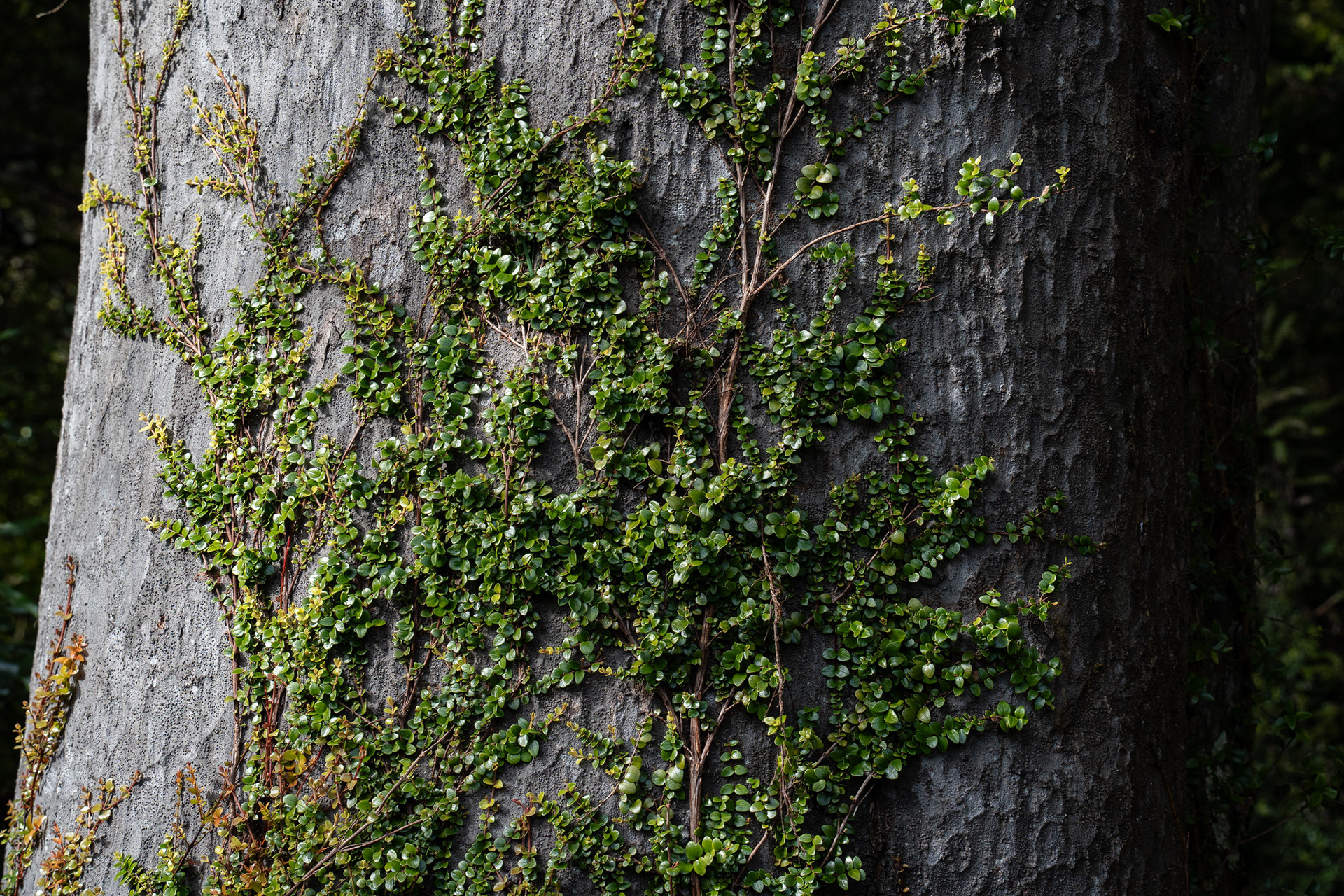
Vine growth on a tree.
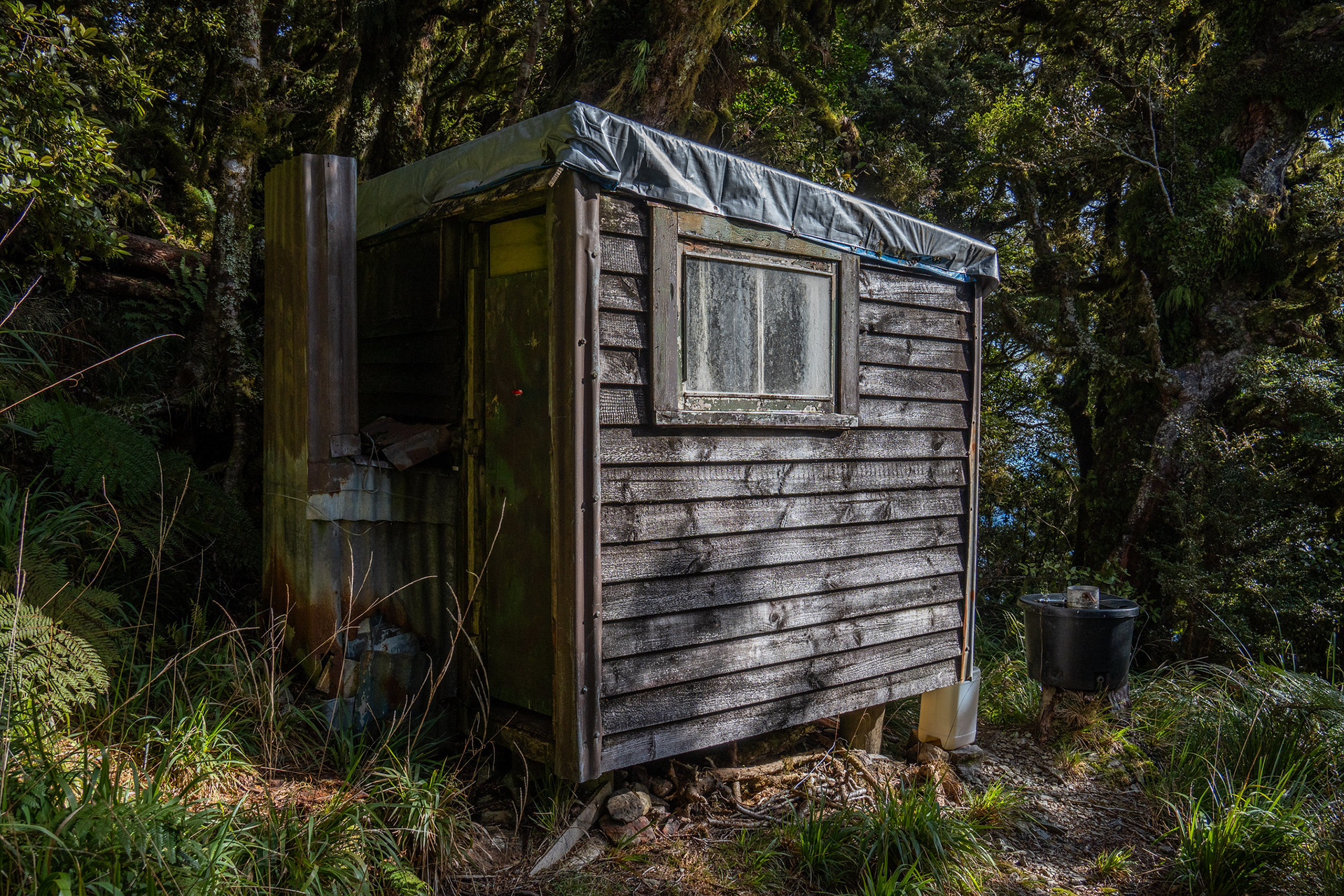
There is a possumer's hut (Thornhills Hut) near where the track hits the bushline. I decided I might as well pay it a visit, especially as it's now shown on the new iterations of the topo maps. Having struck out around the 930m contour, I dropped across and down to the marked spot but after 10 minutes or so, was drawing a blank. I hadn't done any research on this trip as it had been a spur-of-the-moment decision, so I resorted to Google which mentioned it's further down that marked. Armed with that extra bit of info, I returned to the main track, dropped down to about 910m and sidled off to reach the hut within a few minutes.

Thornhills Hut.

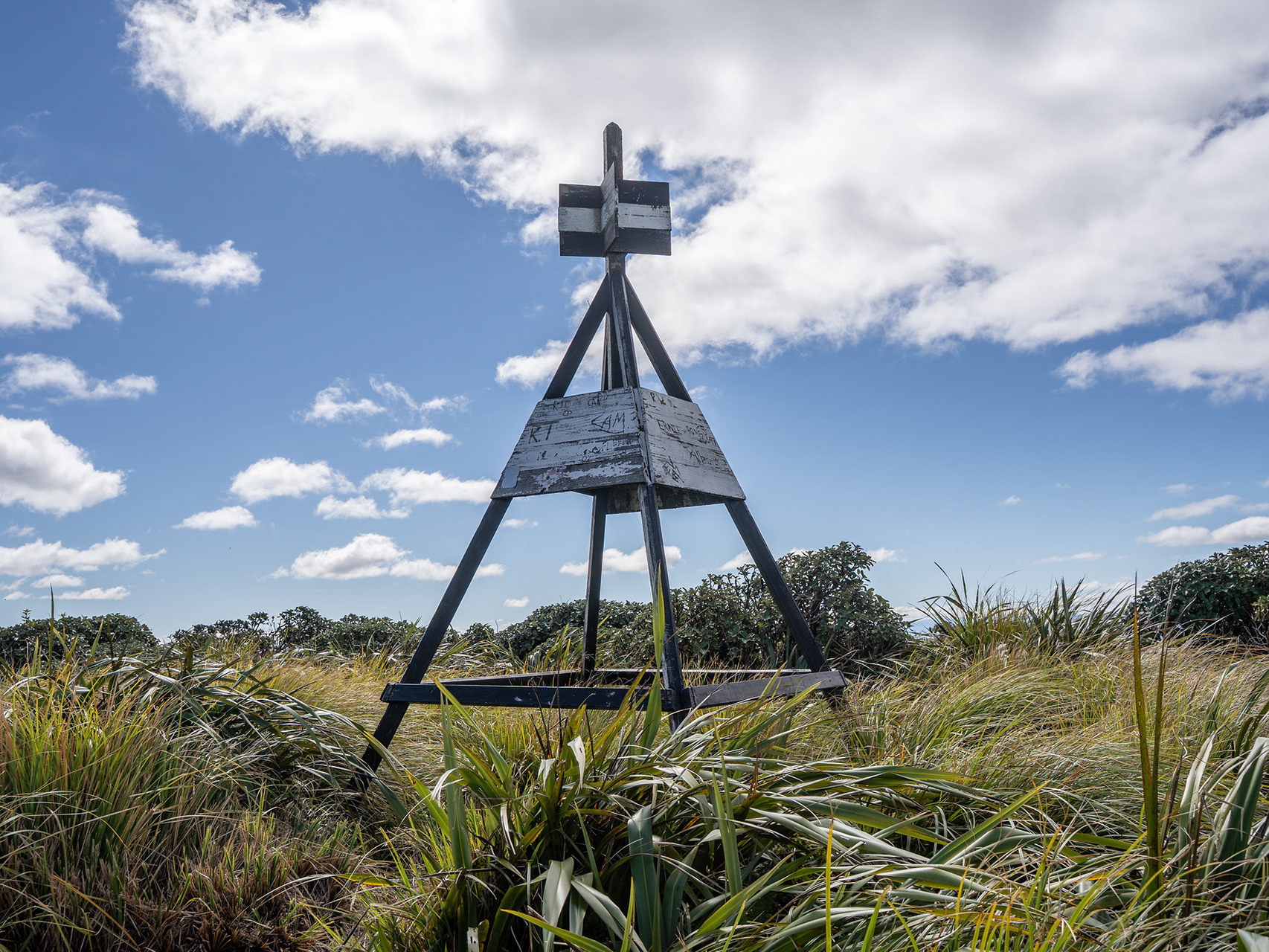
Having regained the main loop track, it was only another few minutes to the bushline. It's a bit indistinct, with a bit of a mottled transition from a moss / fern environment to stunted scrub. There was also a little bit of snow, to keep things interesting. It was about here that the footpad turned to bog, and largely remained that way for the next few kilometres. Nevertheless, I soon reached the trig which yielded some views.

Approaching the bushline on the Kapakapanui Track, with a very rich understory.
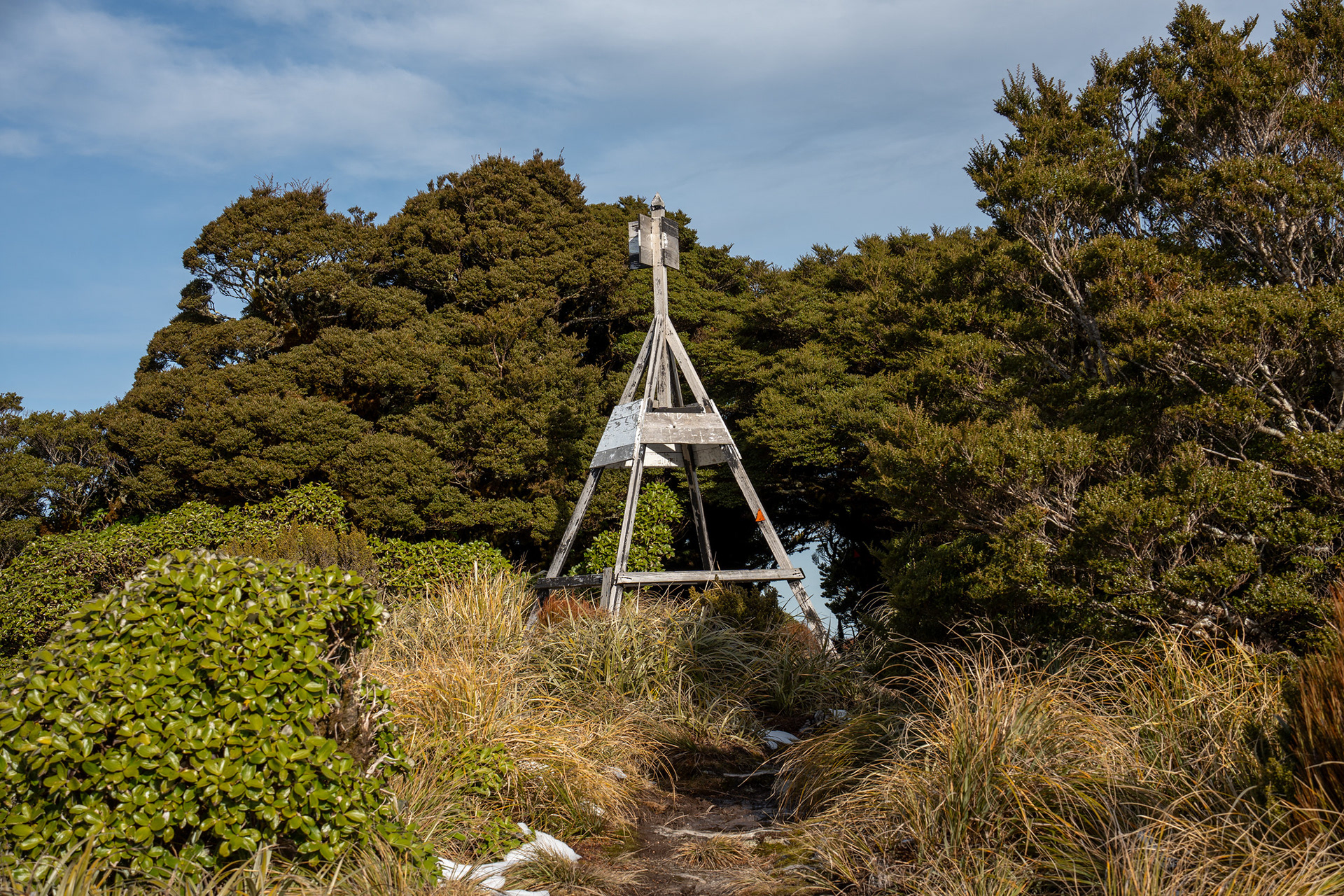
The Kapakapanui trig.
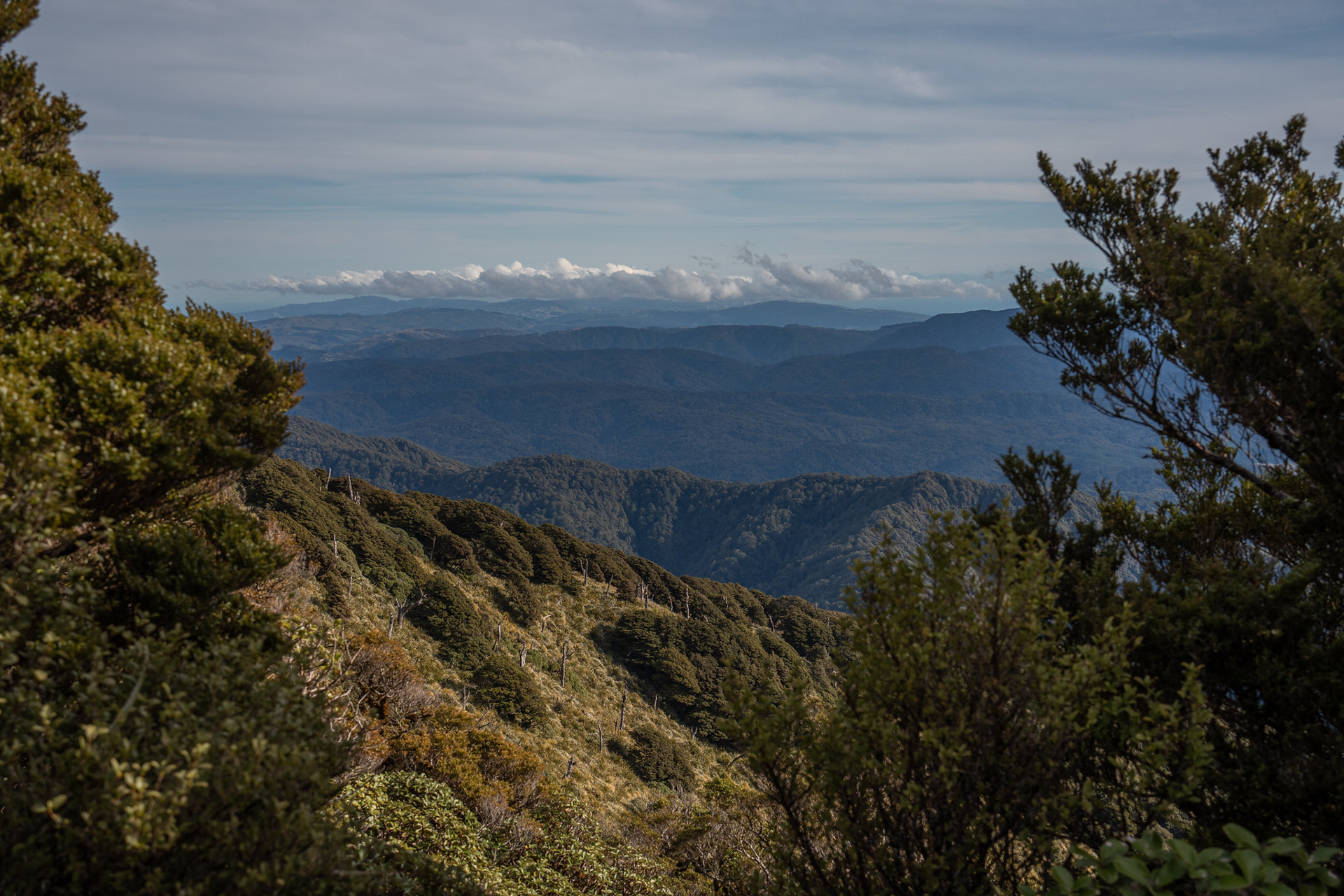
While the views from the summit itself are a bit occluded, nearby vantage points give views in a range of directions.

Looking down to the SW, back over the ascent spur.
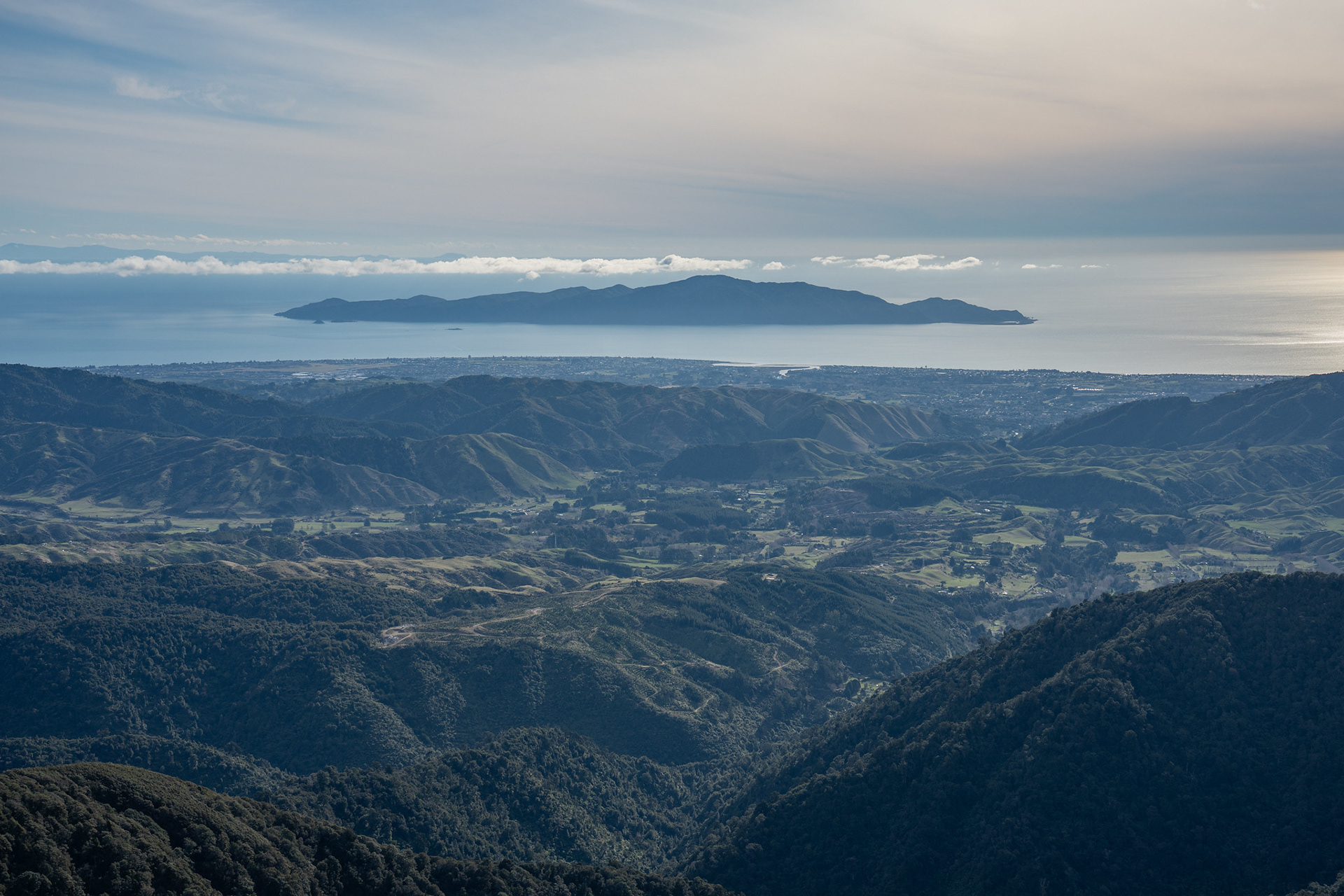
Kapiti Island to the west.
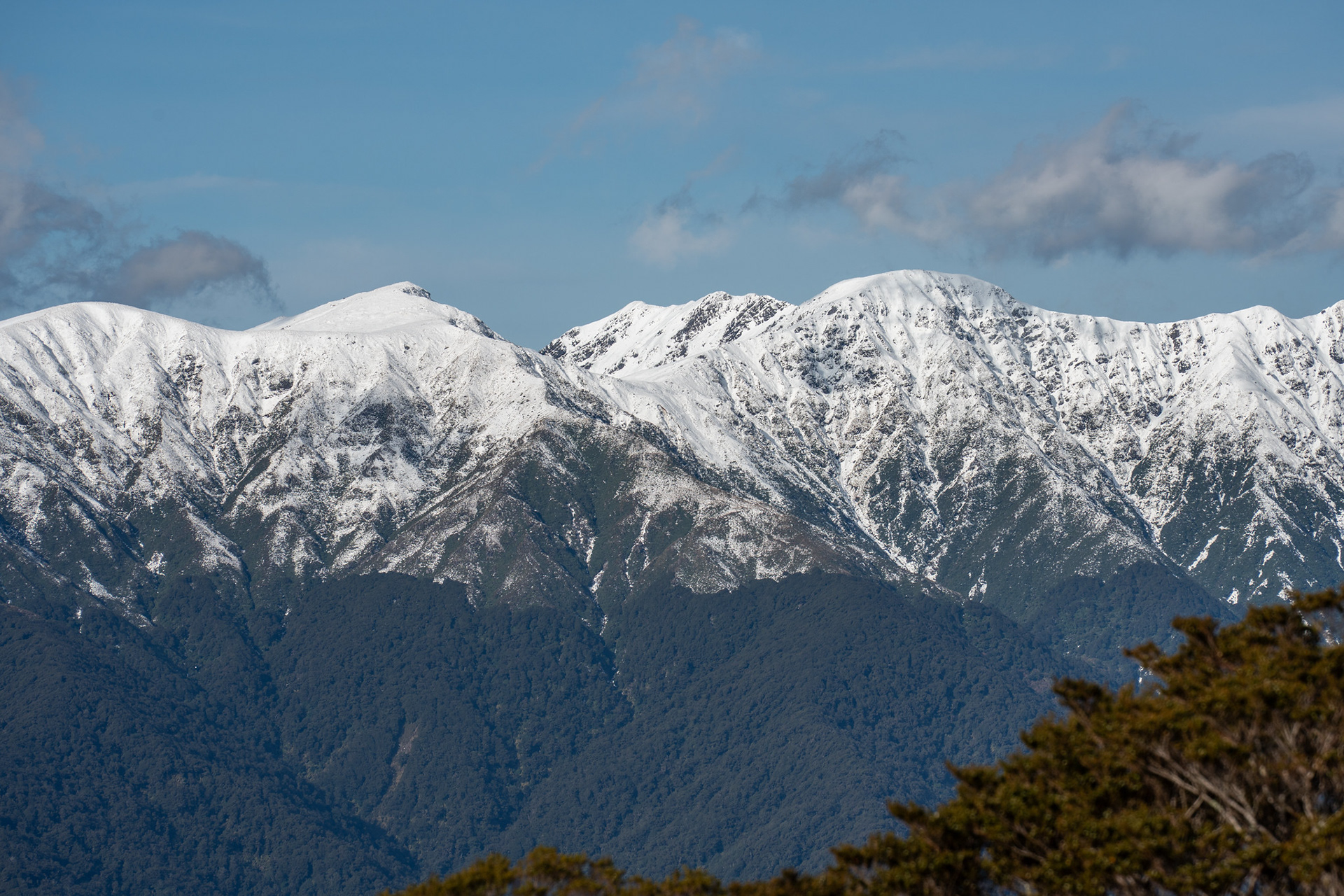
Across to the high peaks of the Tararua Range, the dominant ones are Field Peak (left) and Mt Hector (right).
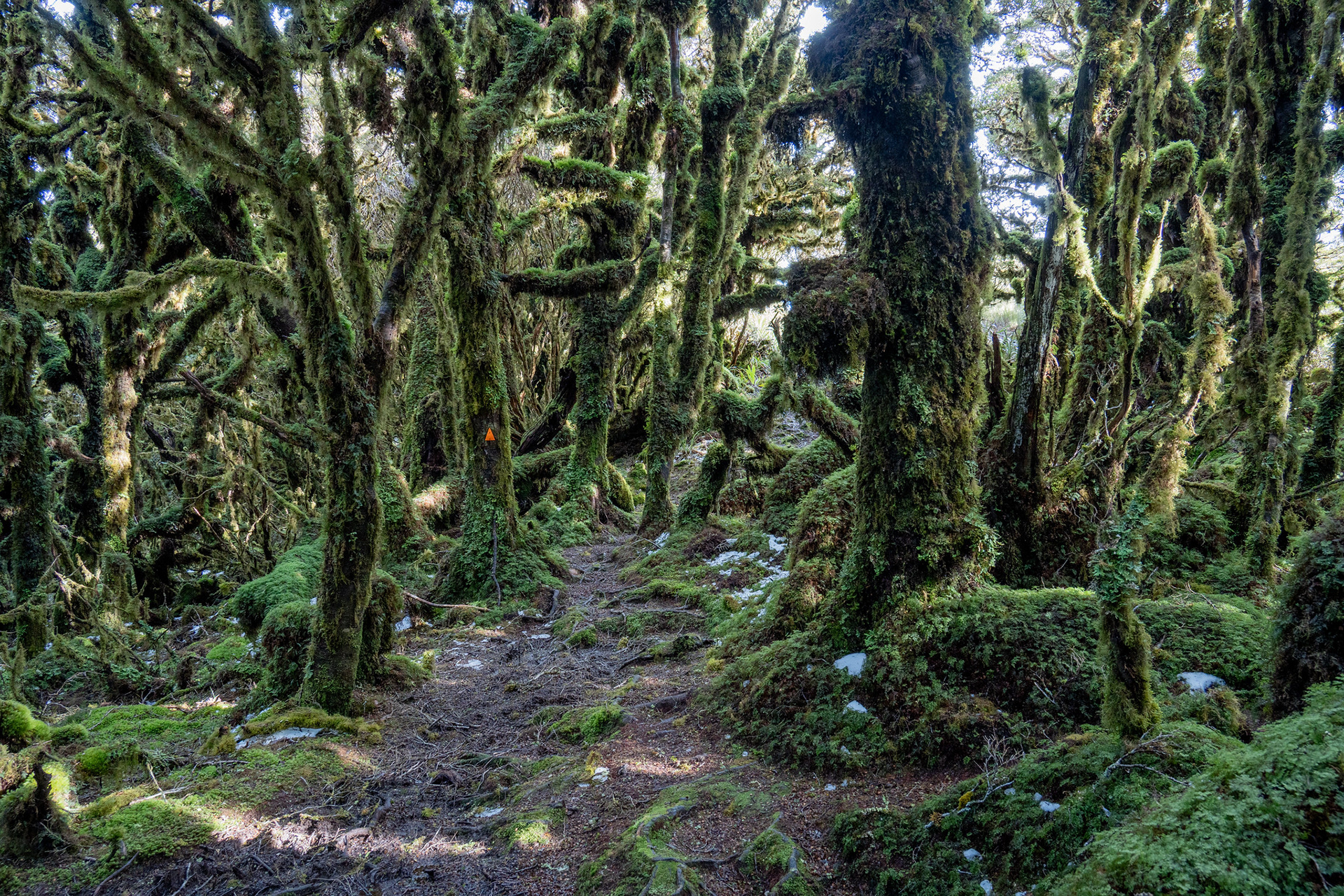
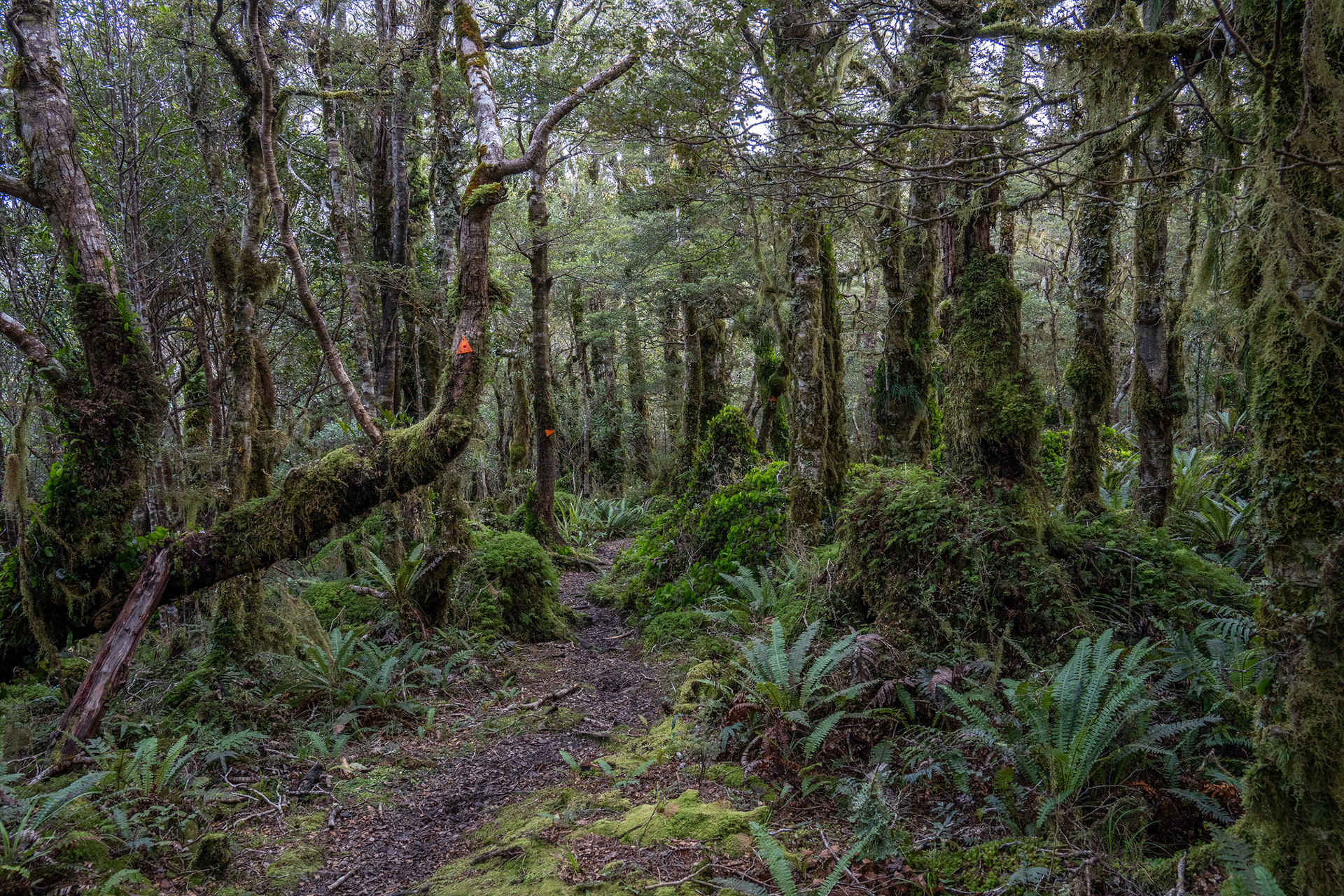
Descending off the summit gives increasingly expansive views, and even smidges of tussock. There are also sections of the so-called goblin forest, gnarled and stunted trees with rich coverings of moss.

Goblin forest on the summit ridge of Kapakapanui.
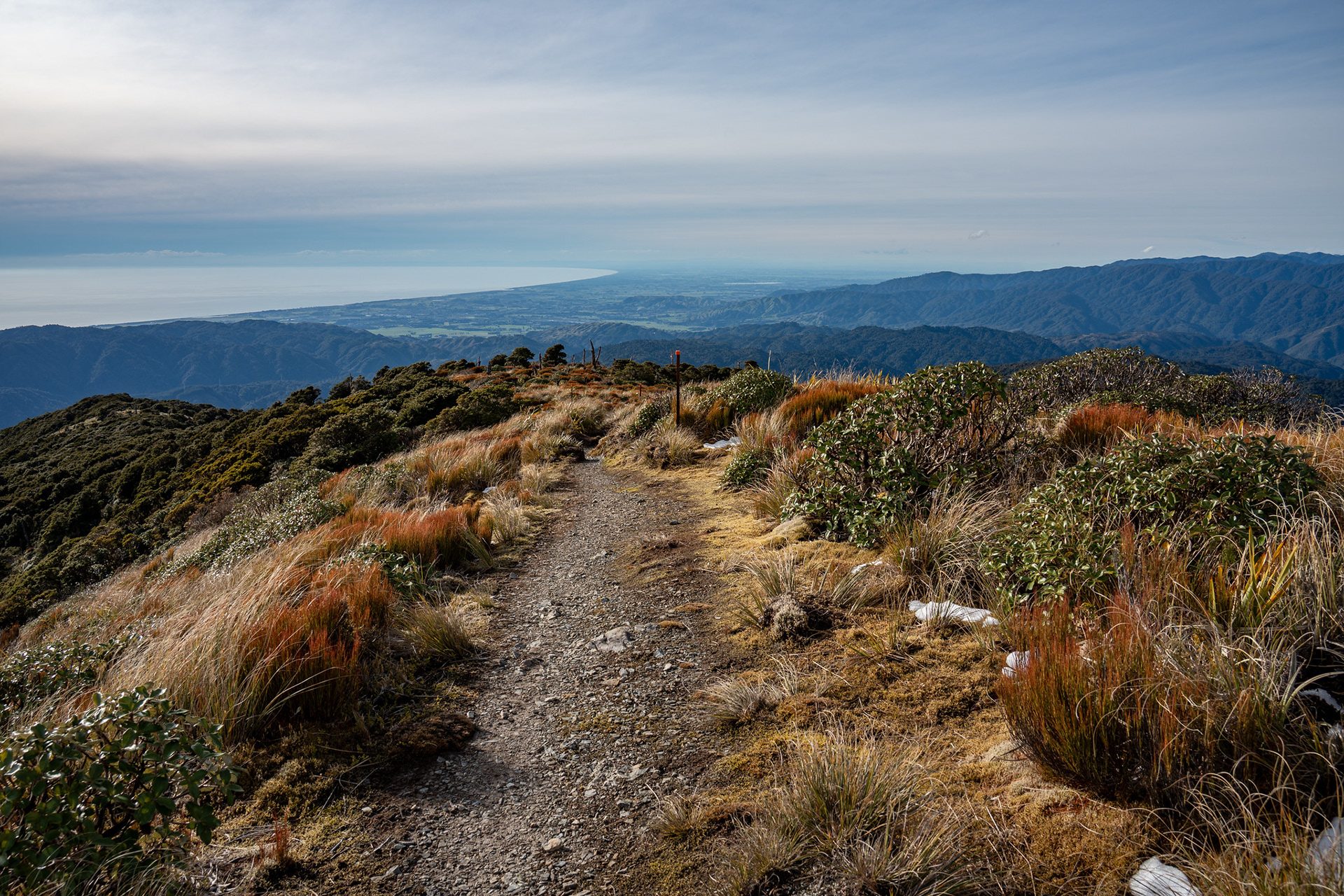
As the route drops down to the far bushline, the more classical alpine species begin to dominate and the beautiful curvature of the North Island coastline comes into view.

About to drop back into the forest canopy.
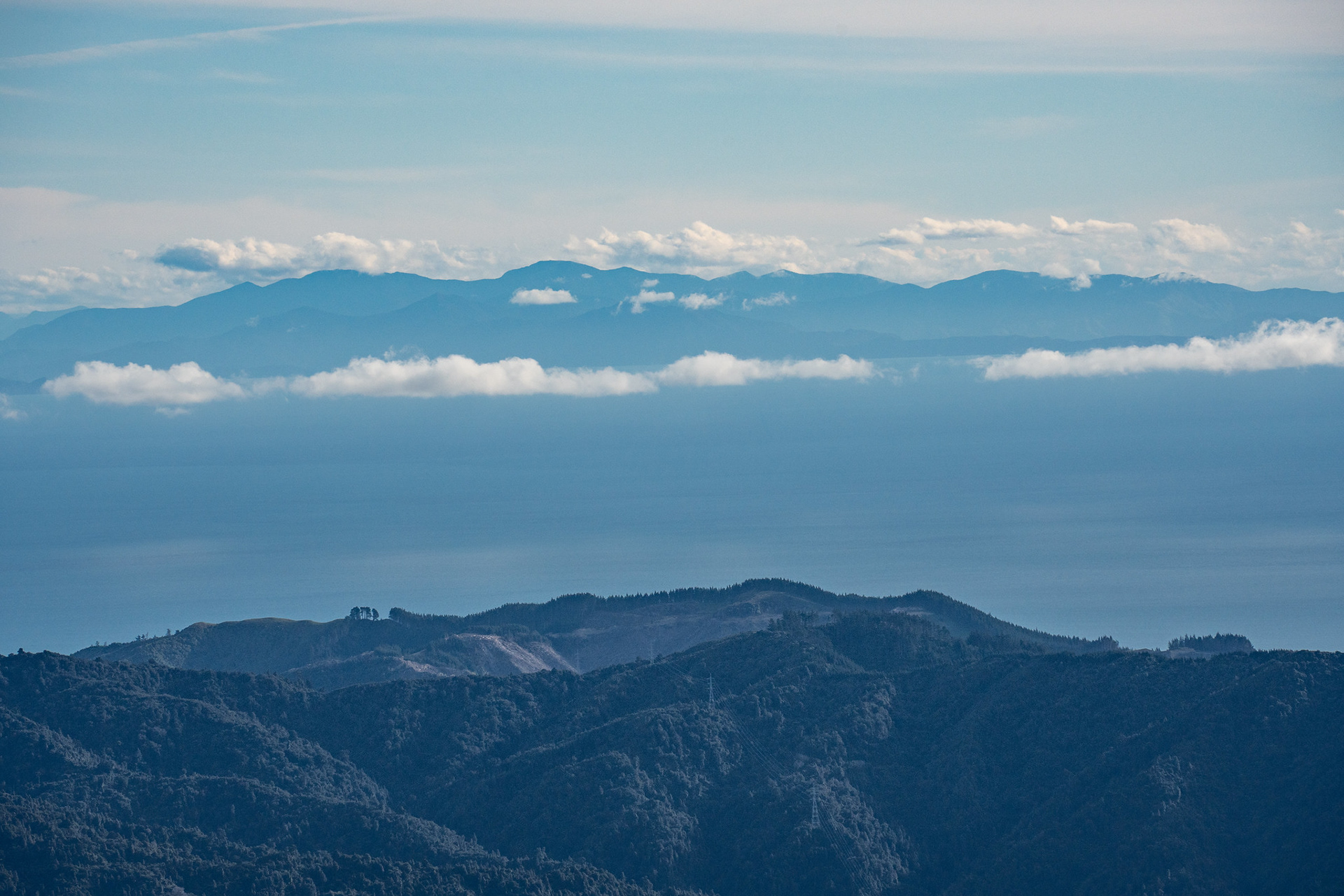
The upper section of the descent is largely goblin forest, and can be rather muddy. There are smatterings of views, including a good vista across to the upper South Island.

Looking across to the top of the South Island.
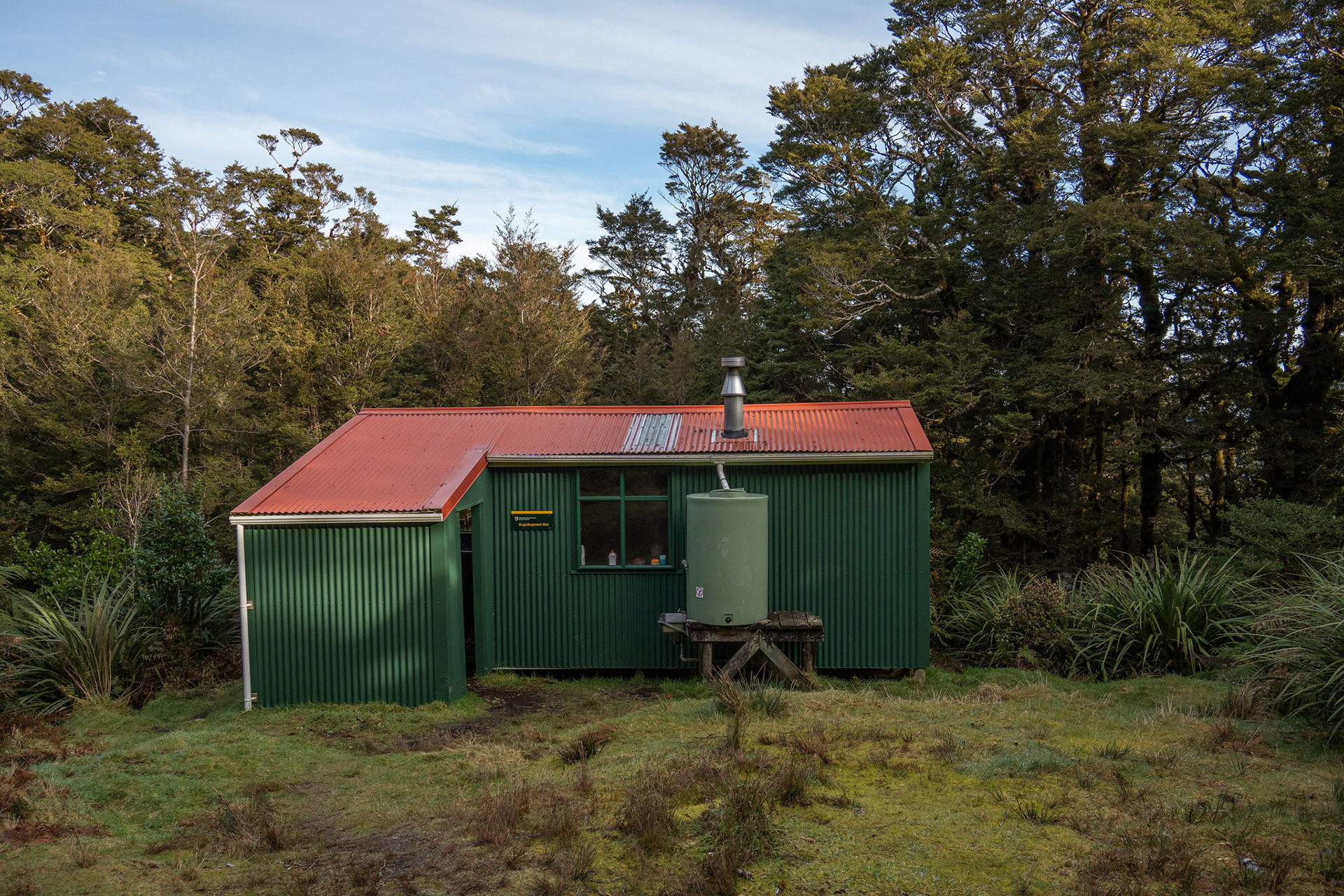
Perhaps an hour after leaving the summit, the route reaches Kapakapanui Hut. It's actually a very nice hut, tucked away in a clearing with a cosy floorplan and reasonable amenities. Would be a cool place to spend the night if time allowed, but unfortunately time did not allow in my instances - I took the chance to say hello to the two others present, sign the hut book and continue the descent as the afternoon wore on.

Kapakapanui Hut, a delightful spot.

I had allowed myself around 4.5h of daylight when setting out and hadn't brought a headtorch, so continued with the timely descent back down to the Ngatiawa (the DOC timing is 6 - 8h, which doesn't include the excursion to Thornhills Hut). As mentioned before, the upper section of the descent is very flat before the route descends in anger for the final kilometre. The forest is quite similar on both arms of the loop, the section of track between the hut and the roadend is well formed but there are a few patches of windfall.

Descending down to the Ngatiawa River.
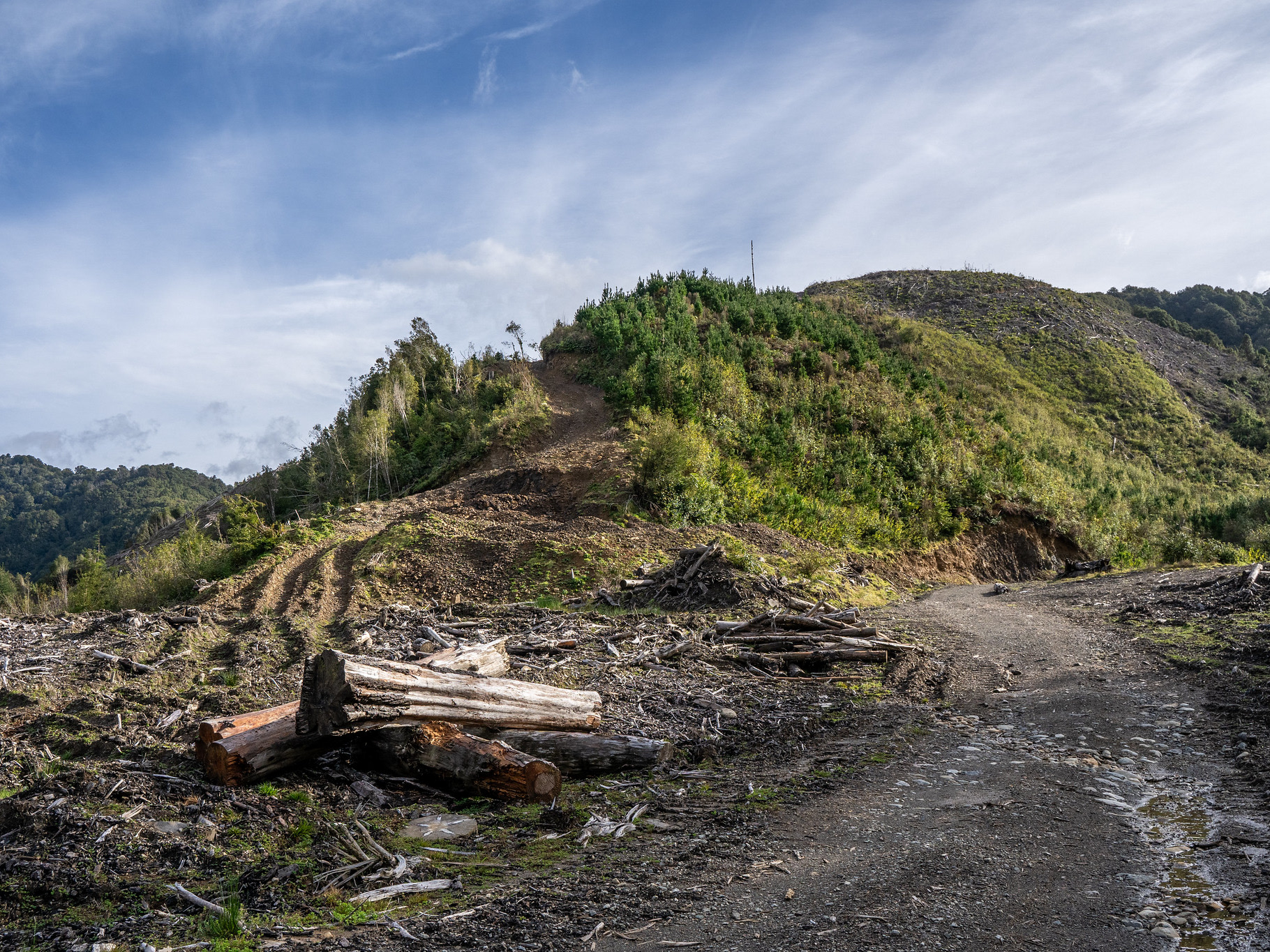
When you reach the valley floor, it seems confusing at first as you descend the river (with five crossings) before turning upriver for a bit. Looking at the map, it's simply because that arm hits one of the tributaries first and that is descended rather than the main river - it's all well marked and you are unlikely to get lost. The route soon regains the junction, and from there it's that same kilometre back out to civilisation.
Some general trip notes:
* The loop is generally done as a day trip - DOC estimates 6 - 8h return. This should be enough for most people, online accounts typically report 5 - 7h. If you are unsure of your fitness, overnighting at the hut is an option. Those who are fit will probably go a bit quicker, excluding the search for Thornhills Hut I took 3h walking time / 3.5h total time - I didn't run any of it, but am of slightly above average fitness and wasn't carrying a lot of gear. I would suggest starting early, there's every chance you'll end up finishing early but it does lower the risk you take longer than expected and get caught out in the dark.
* Navigation is reasonably straightforward, the track is well formed and well marked. The loop section itself goes up the main ridge and down the other main ridge, with the only detour being a 30s walk to the hut. That being said, do make sure the trip is appropriate for your skillset. An American mother / daughter combination got lost on this track in 2016, descending a trap line into the adjacent river and were rescued five days later.
* The river crossings are not to be underestimated. In normal flows, they're straightforward. However, people have gotten into trouble with them and needed rescuing while in flood. It would be wise to allow a few days after heavy rain before venturing onto this circuit.
* The entire trip is about 12km with 1,050m of elevation gain.
* Most of all, have fun - it's a beautiful part of the country, there's a great mixture of river travel / verdant forest / open tops and it's only an hour from Wellington.
Note: The tracked excursions at the ~920m contour are searching for Thornhills Hut, and not part of the main Kapakapanui circuit. The upper GPX trail leads to the spur overlooking the gully where the hut is marked on the new topo maps, but there is nothing here (other than foot trails from other parties who have been led astray). The lower GPX trace (at around 910m) leads to Thornhills Hut.

You may also like

Back to Top